Seam

Isi

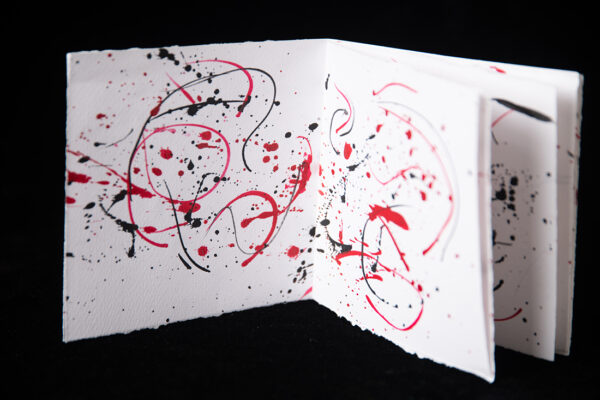
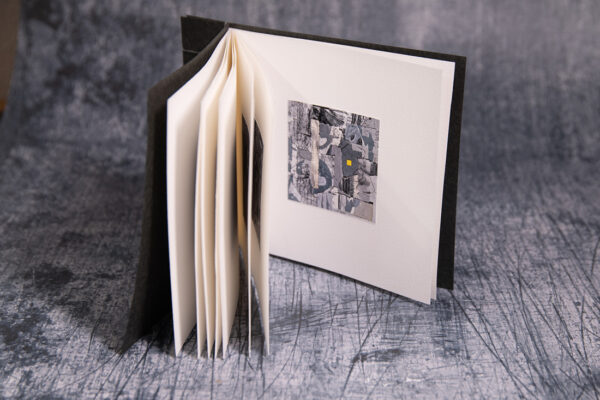
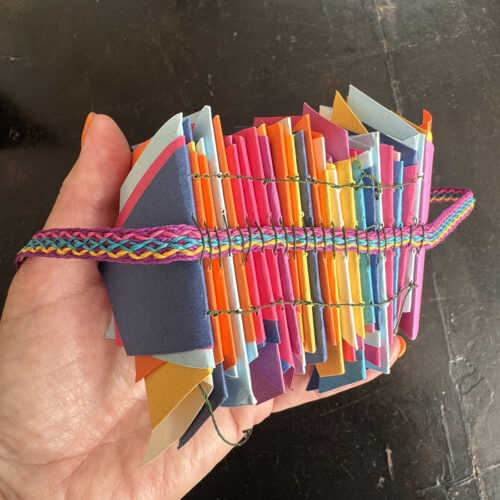
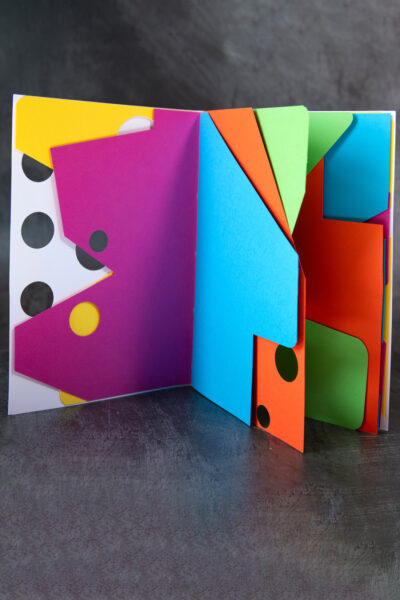
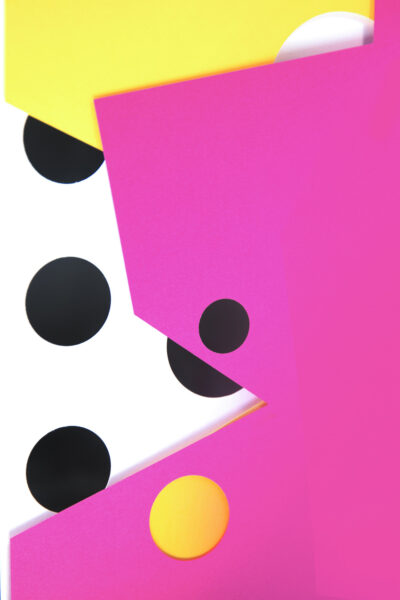
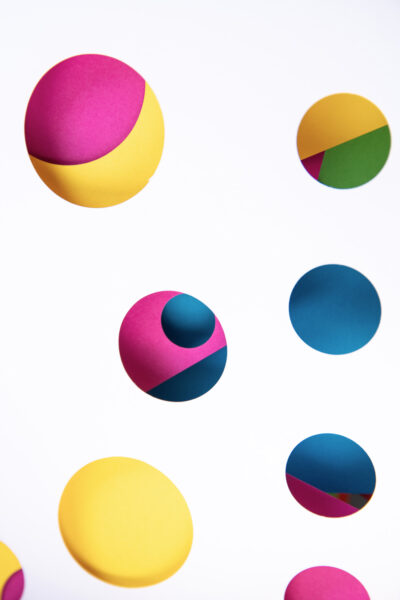
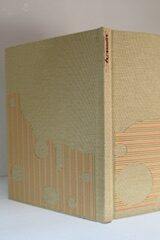
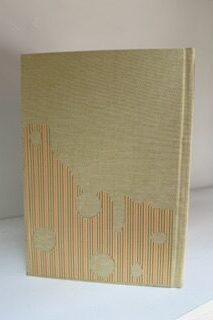
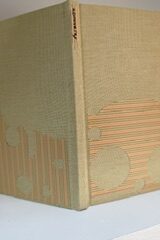
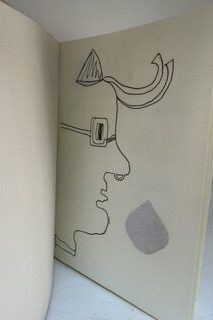
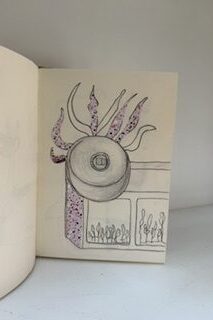
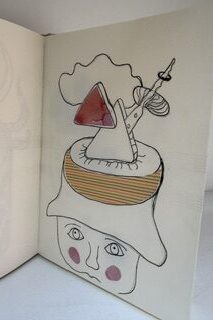
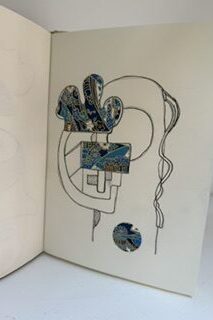
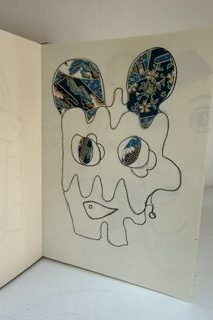
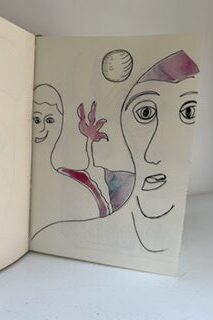
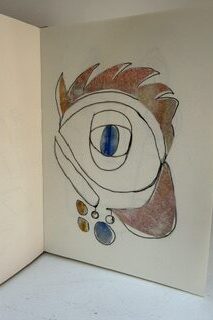
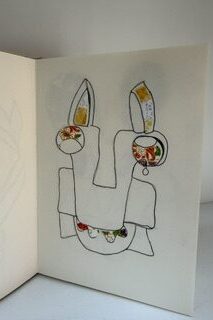
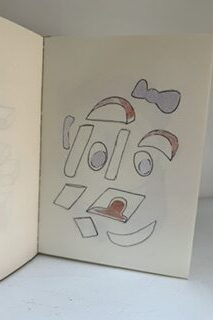
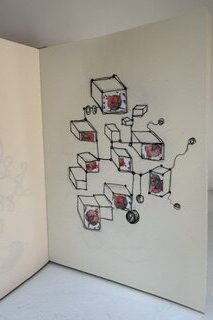
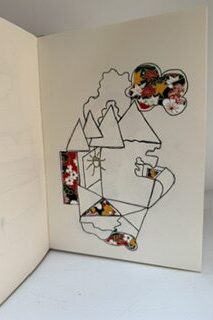
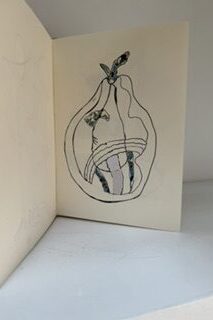
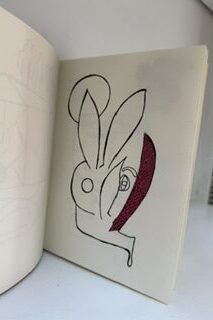
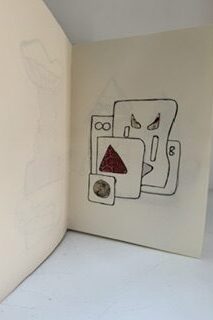
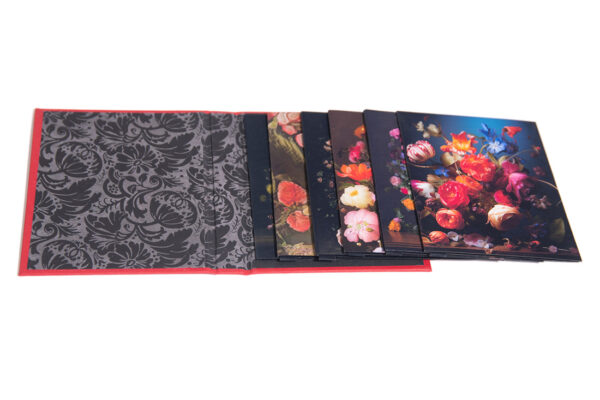
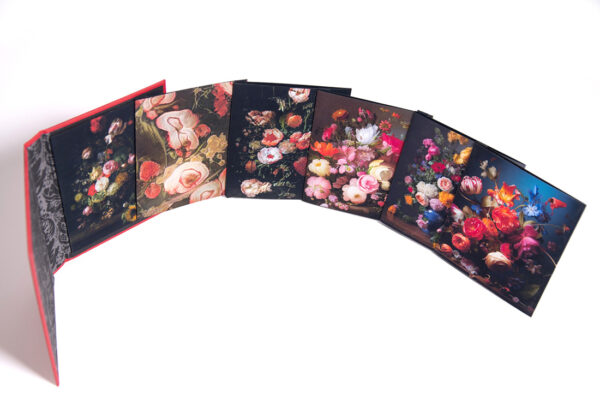
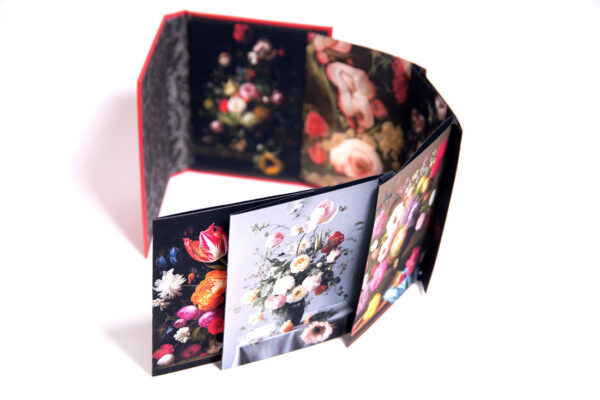
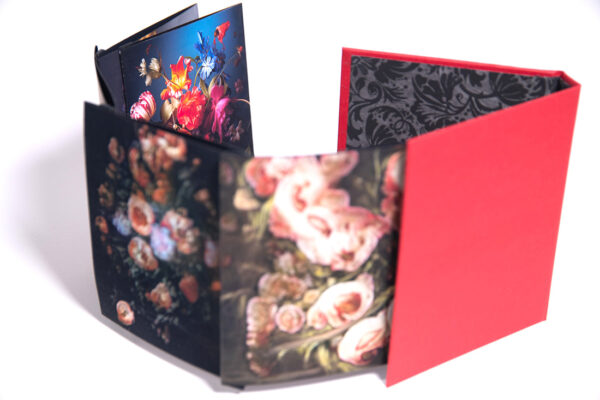
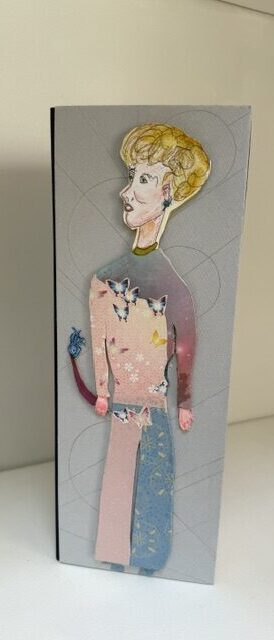
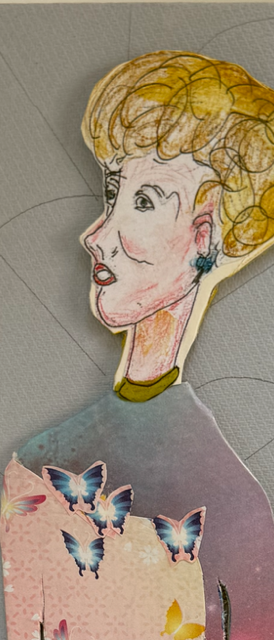
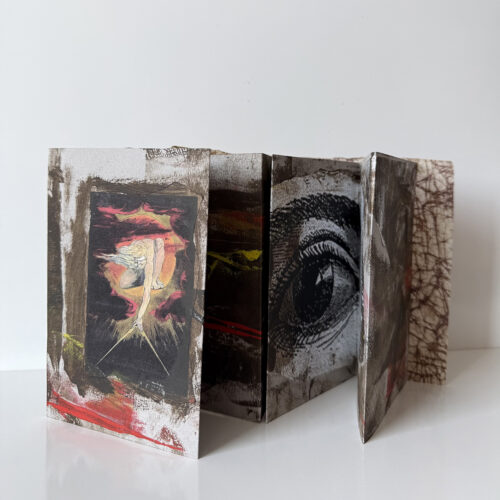
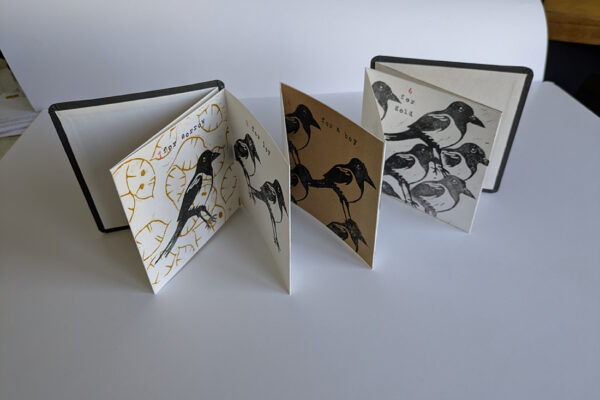
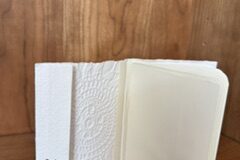
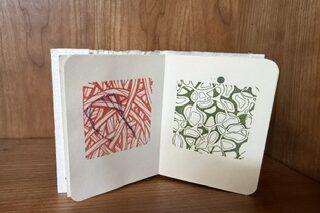
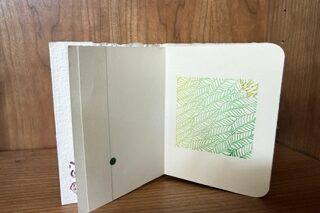
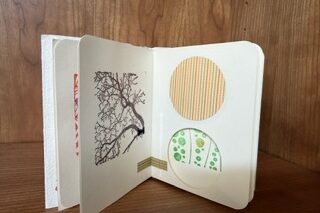
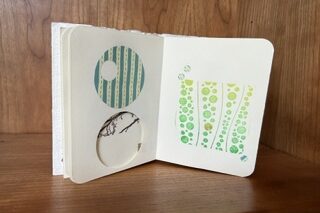
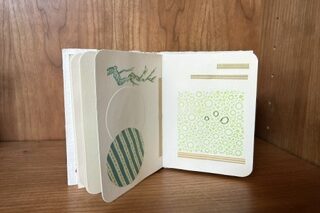
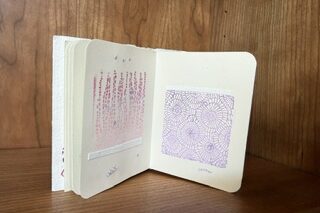
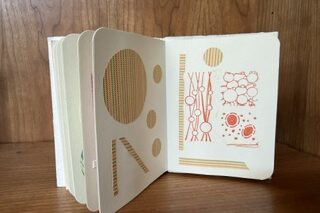
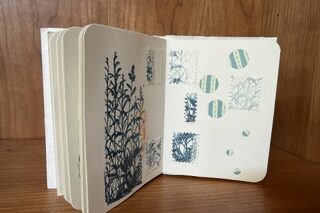
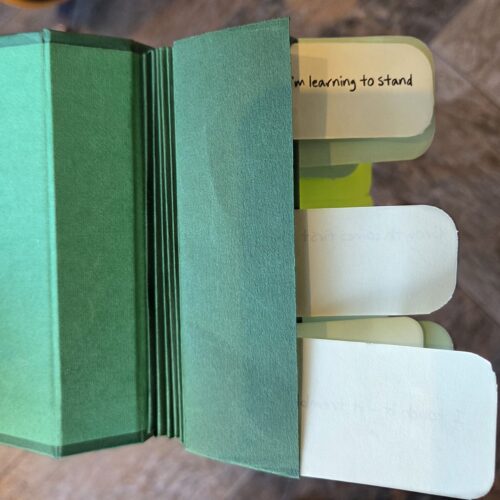
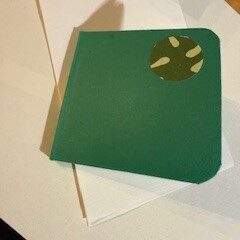
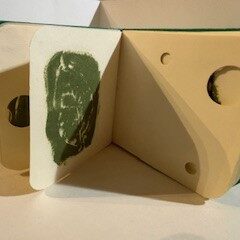
For Seam, this month’s theme, I wanted to stitch paper with coloured threads as the representation of suture. The printed patterns used symbolise our cells how they repair, mend, evolve and come together to create life and energy.

Joan

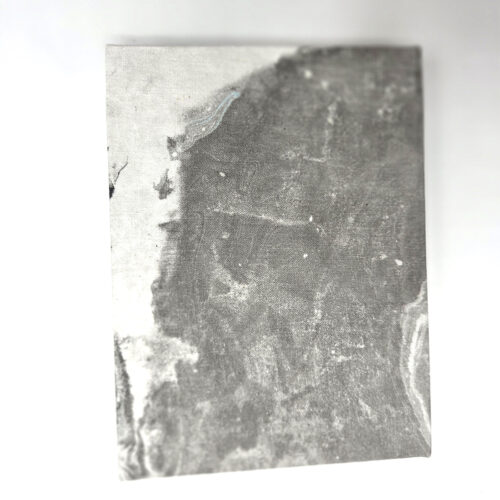
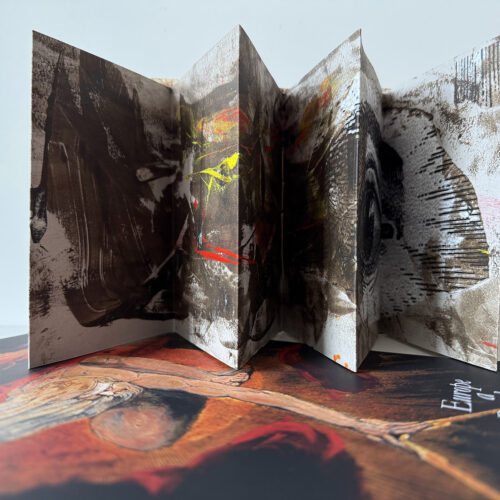
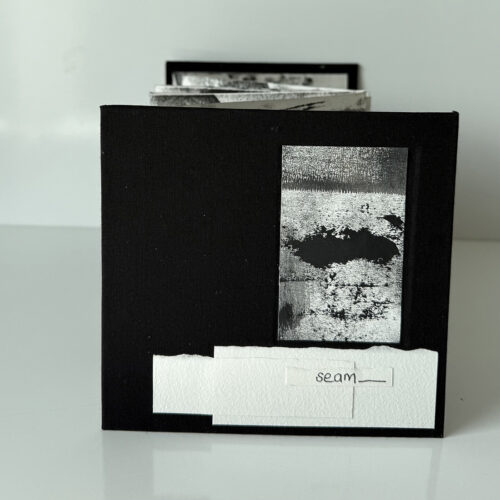
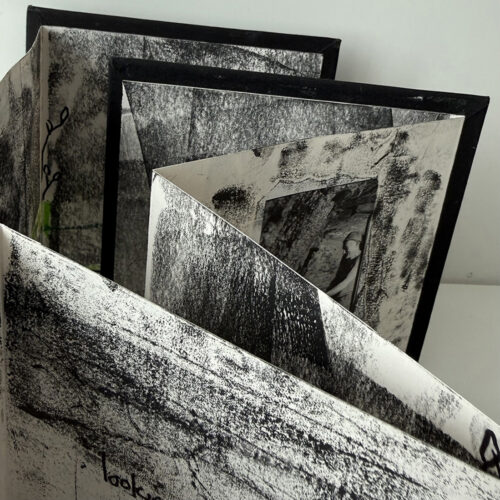
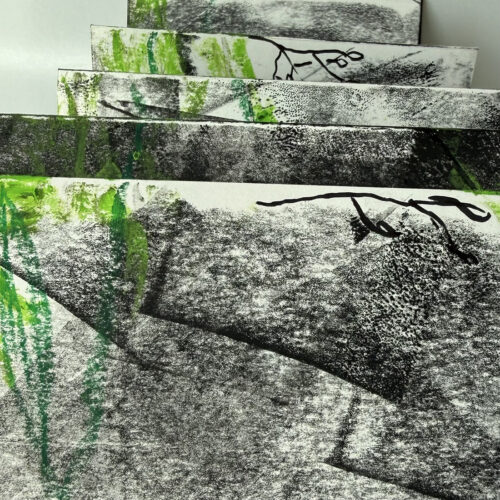
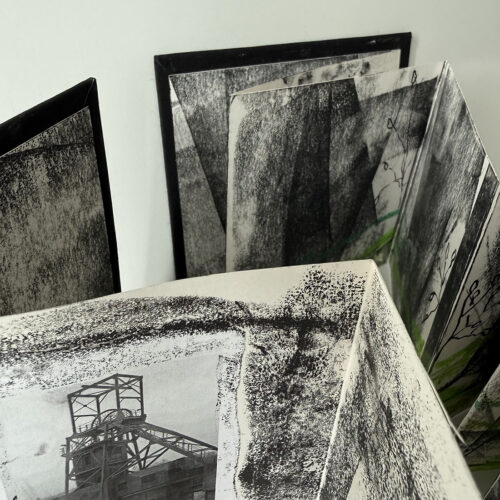
When I was a child in West Yorkshire, most of the men in the village worked in the mill or down the pit. The main seam of coal running through the area was the Barnsley Seam and there were dozens of pits of varying sizes.

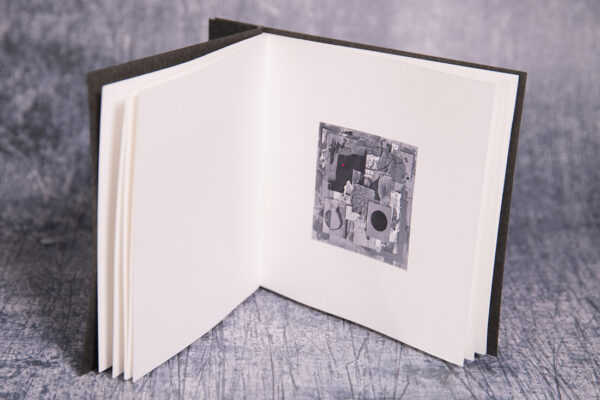
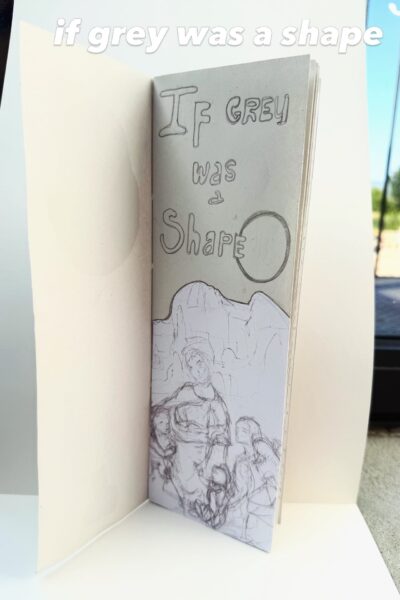
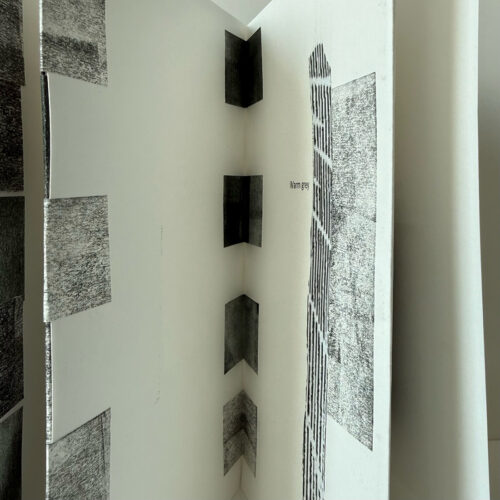
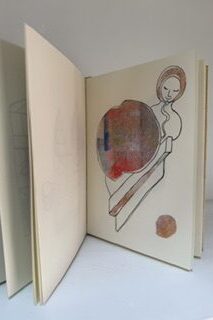
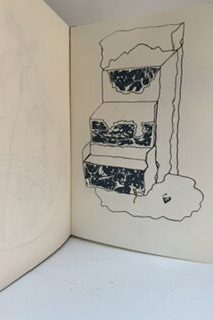
I have tried to capture the darkness, filth and danger of the whole mining industry in this book. It was an important source of employment and many of the old pit villages were devastated when the pits closed down, but it was a hard life.

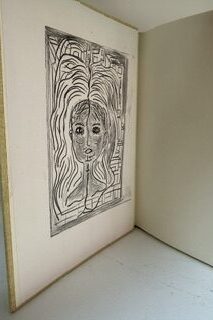
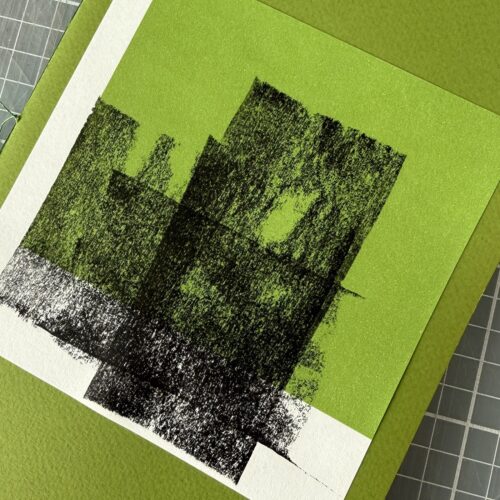
I have used trace monoprint and oil pastels, as well as collage.

Patti

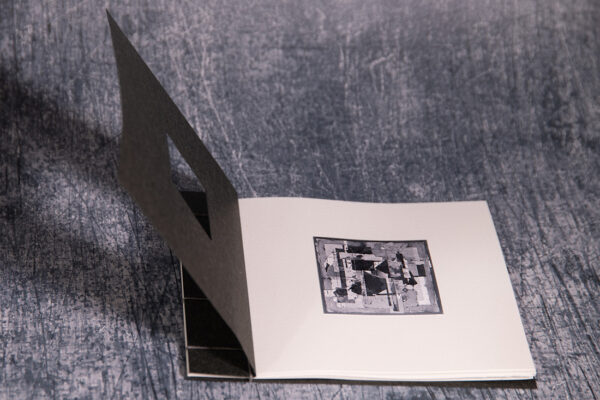
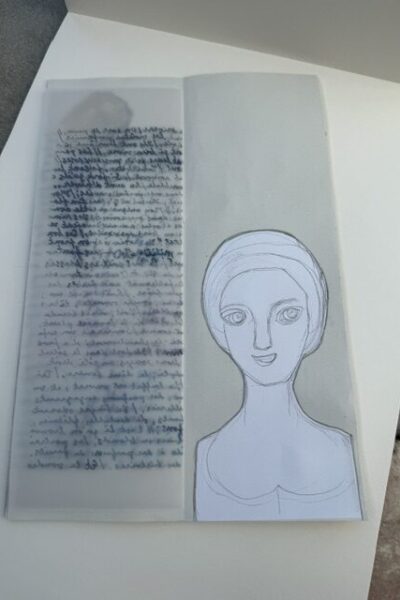
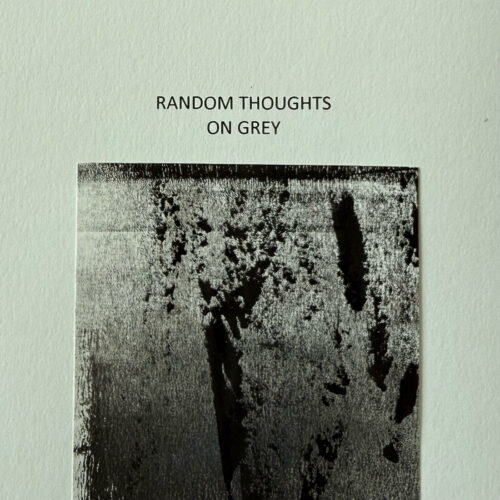
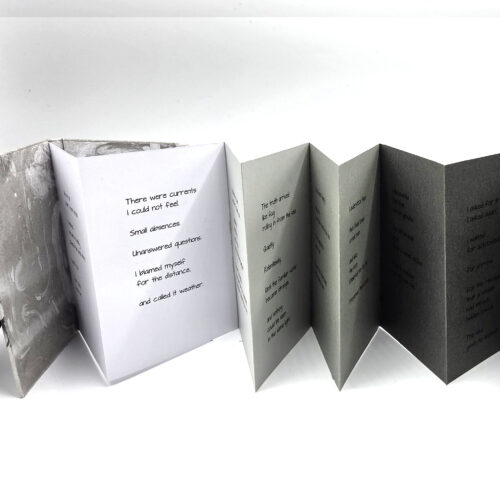
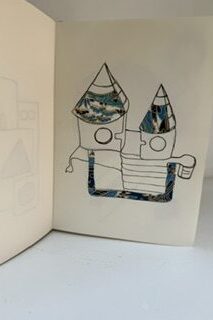
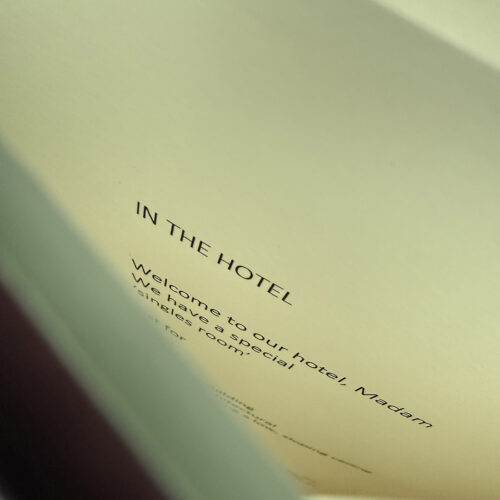
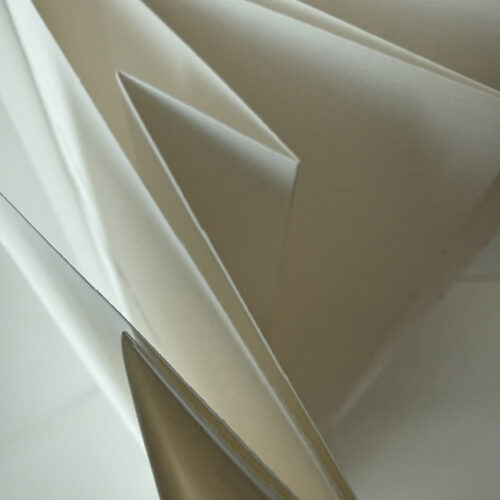
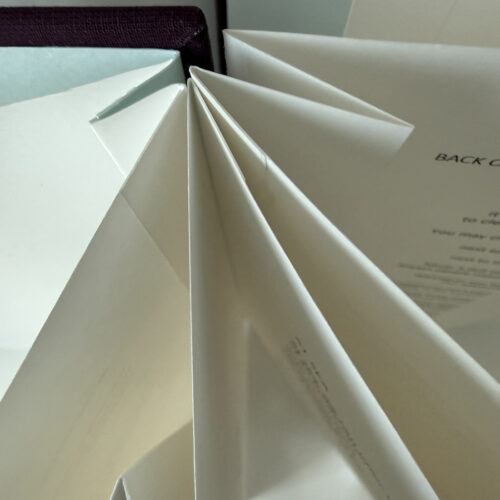
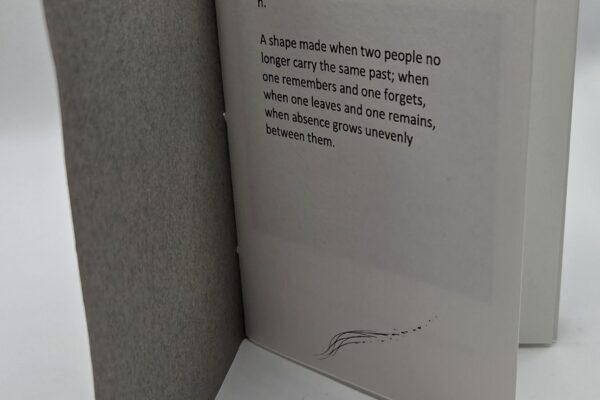
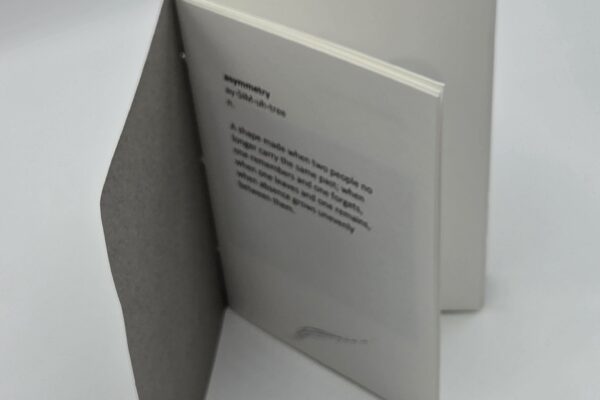
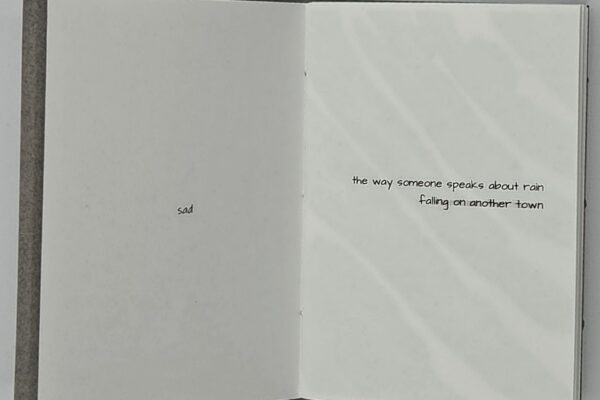
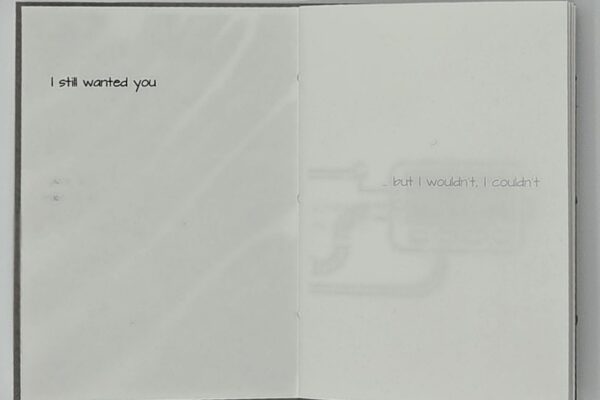
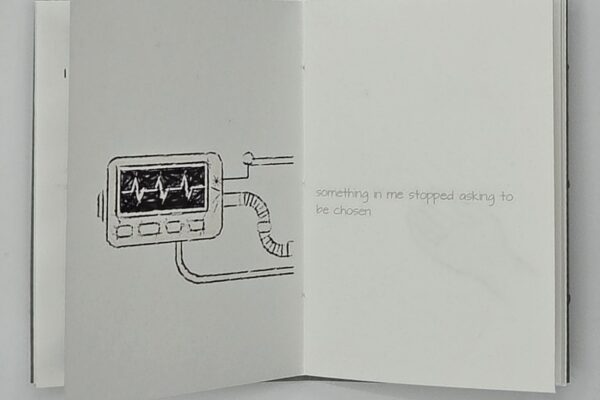
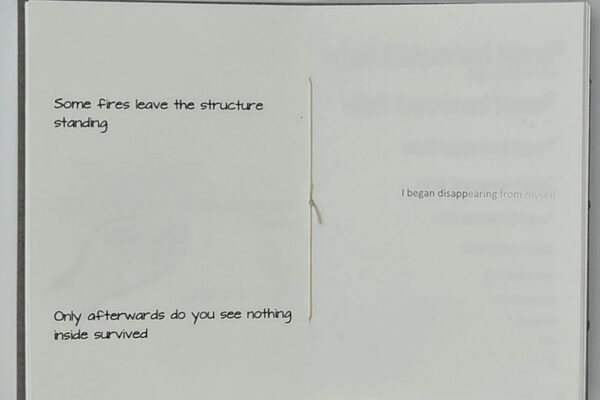
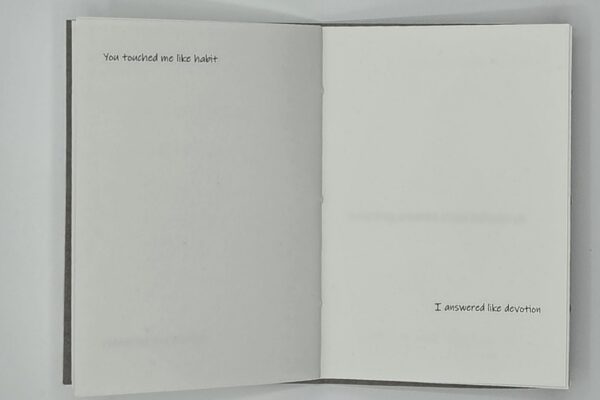
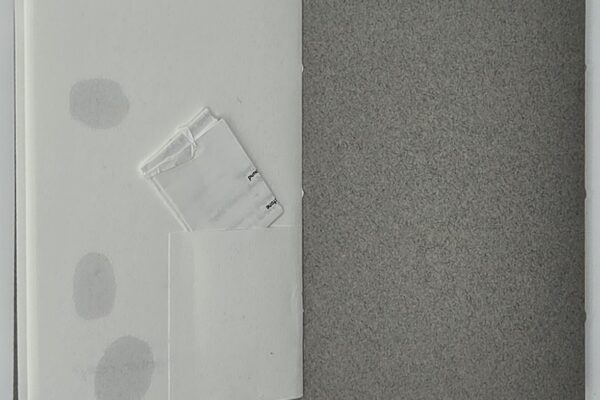
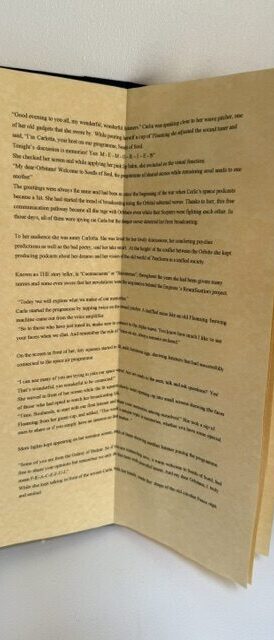
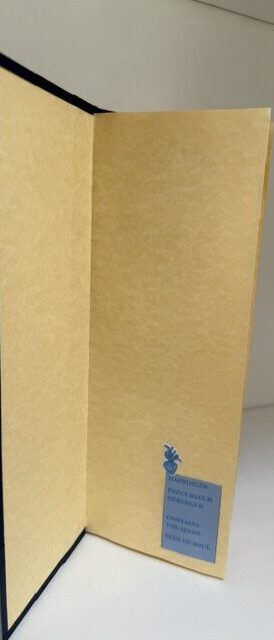
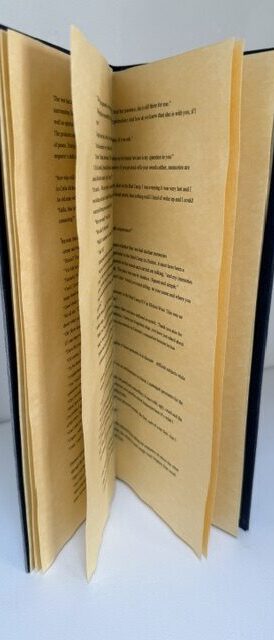
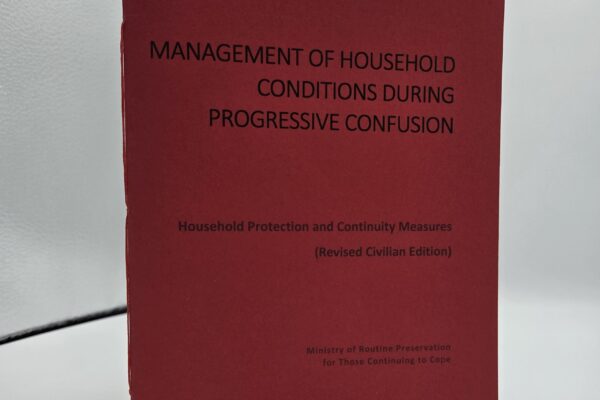
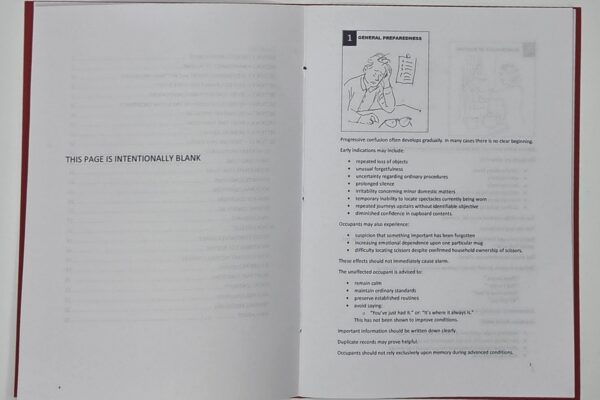
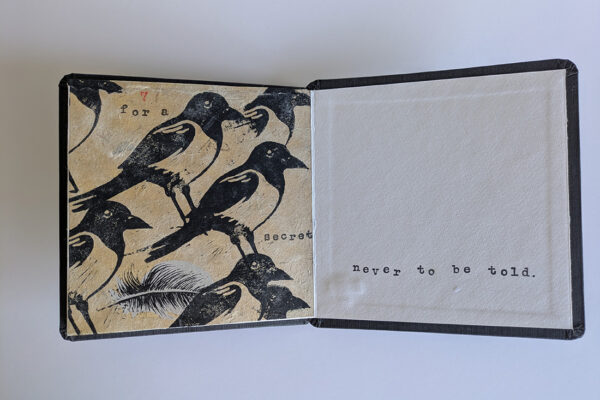
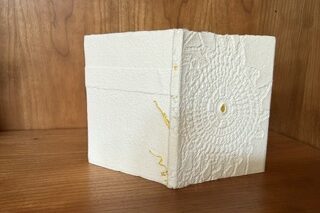
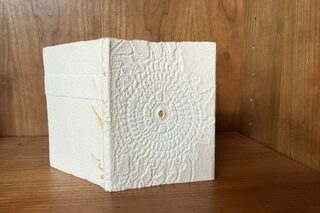
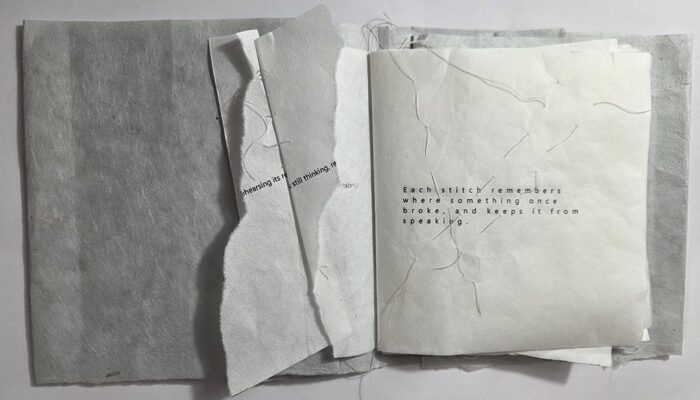
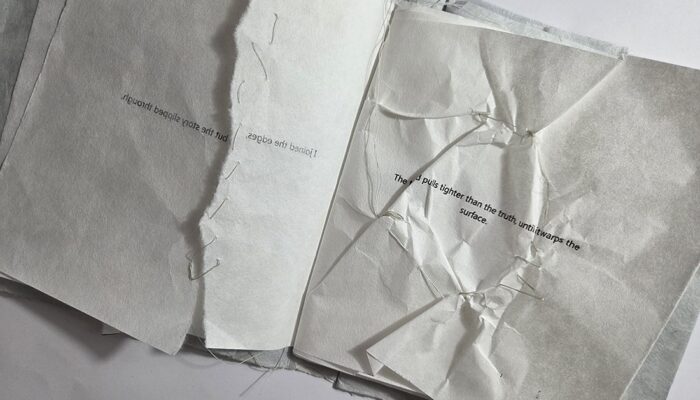
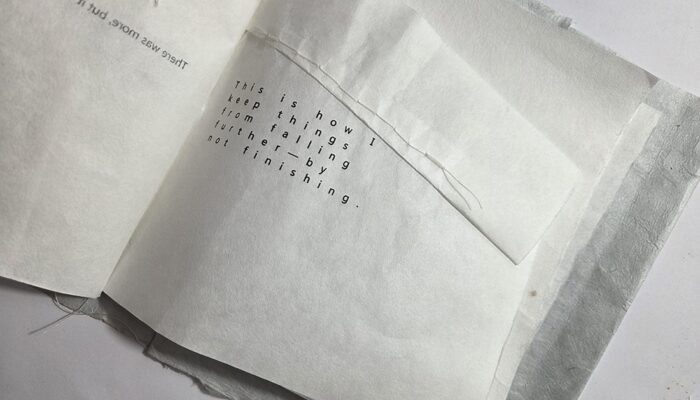
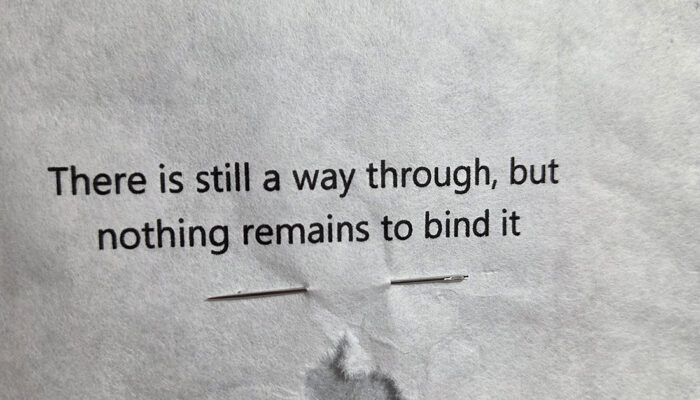
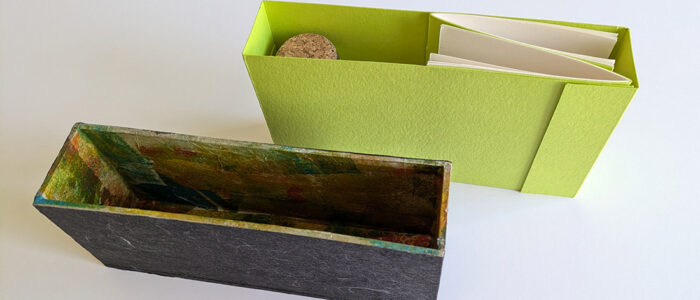
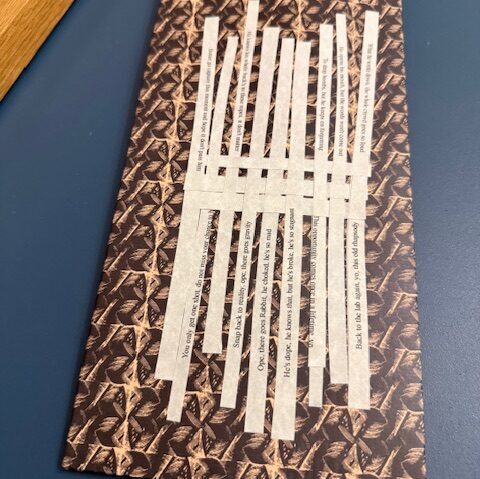
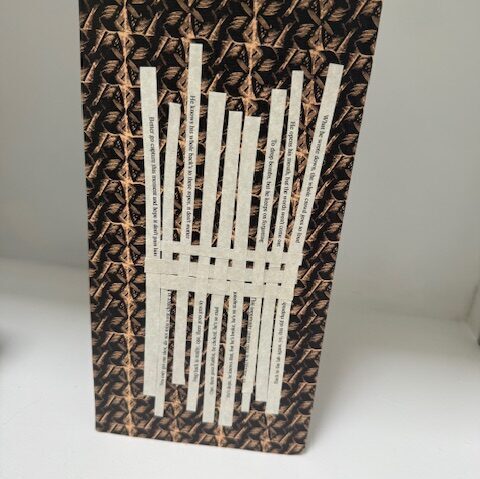
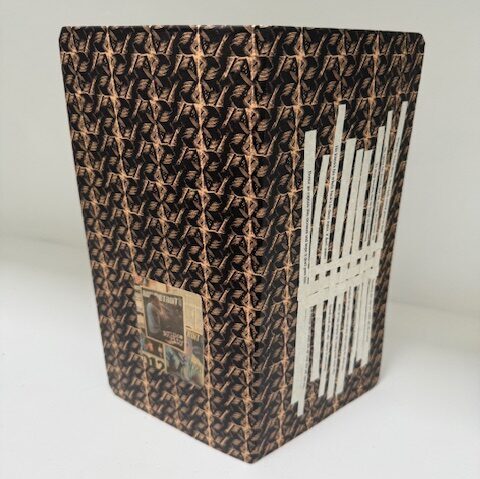
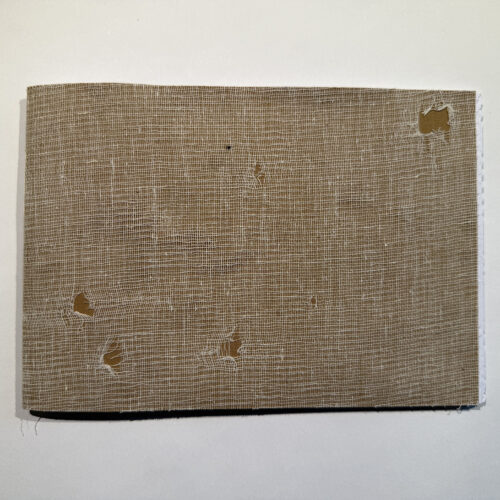
Seam examines joining and repair through repeated stitching. Each page uses piercing and thread to connect paper, but the repetition gradually weakens the material rather than strengthening it. The work does not aim for a finished or stable outcome. Gaps remain, threads pull unevenly, and the surface shifts. The text follows this process, describing attempts to hold, organise, and complete something that does not fully come together. Seams mark points of breakage while also trying to contain them. The book returns to these points repeatedly, without resolving them into a final, fixed form.

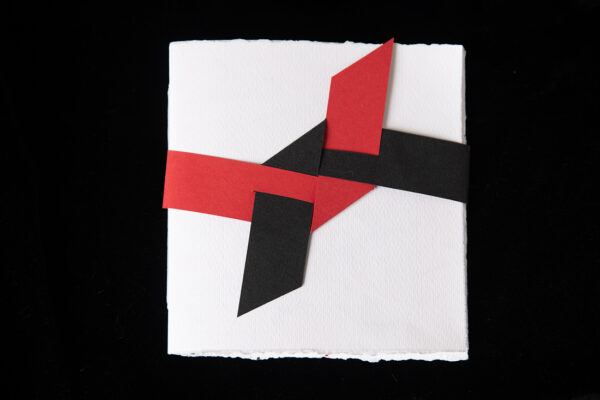
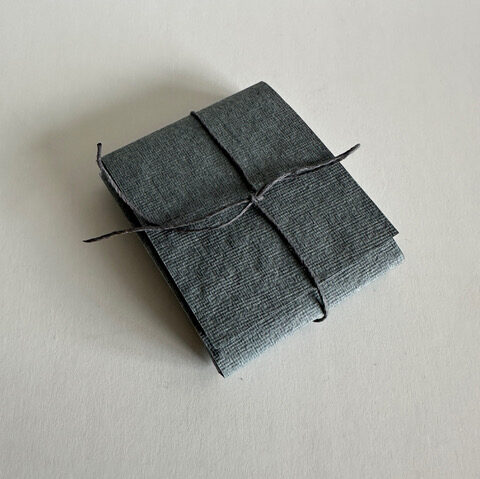
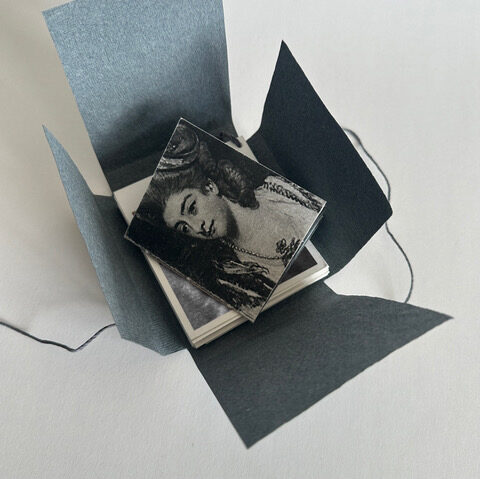
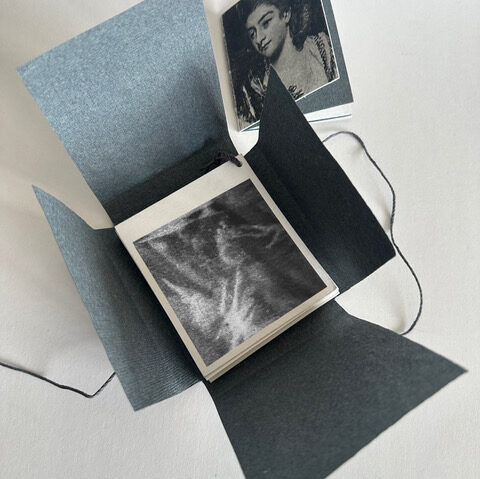
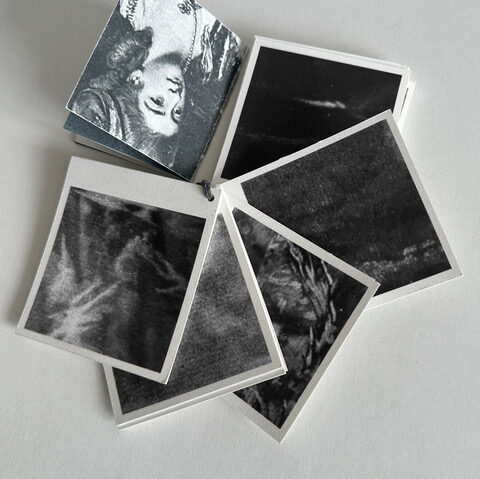
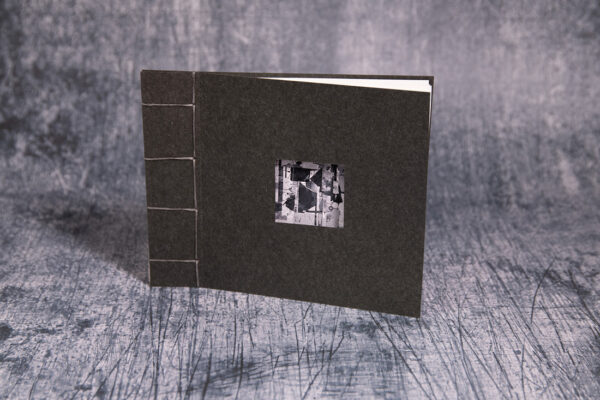
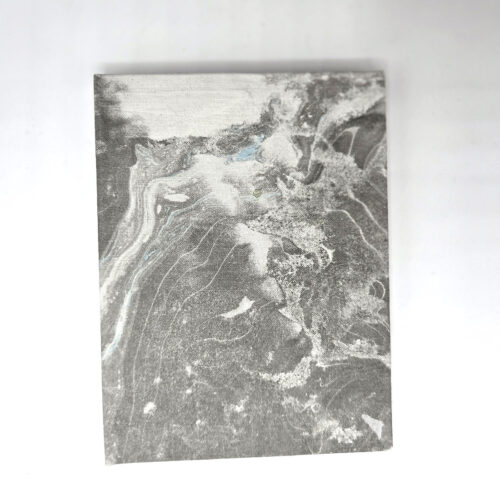
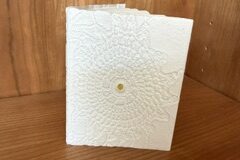
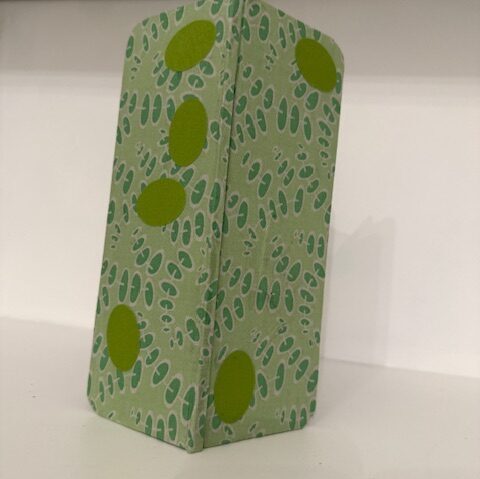
Pamphlet binding with folded cover in handmade paper (concealing a message). Inside pages from Japanese Shoji Gami paper, white cotton thread, typed text, hand stitching.

Tony

I love to use found objects in my work. 

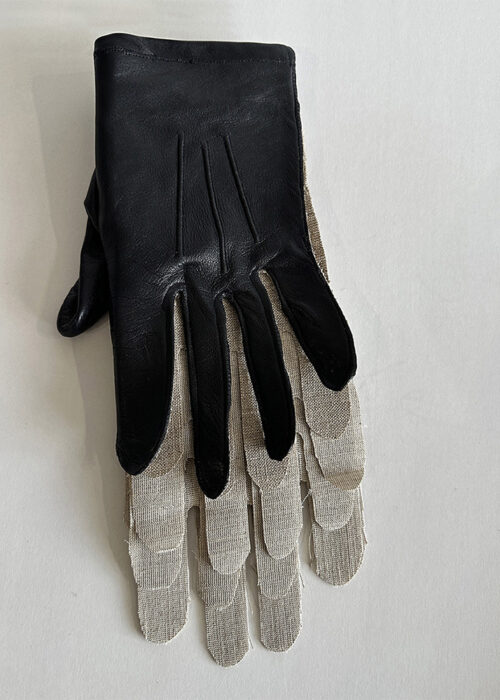
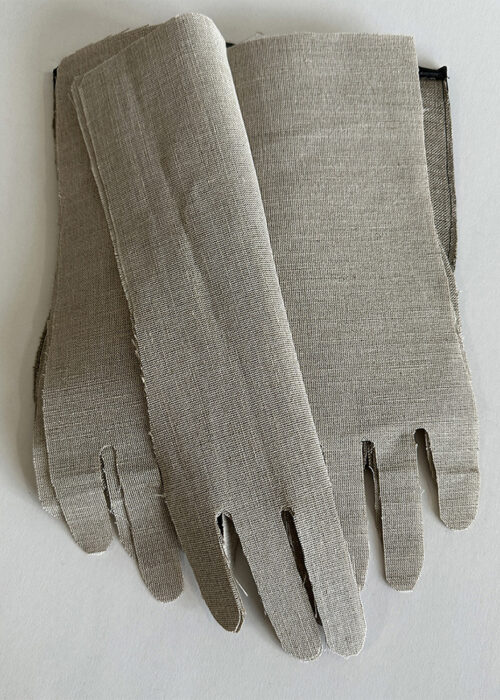
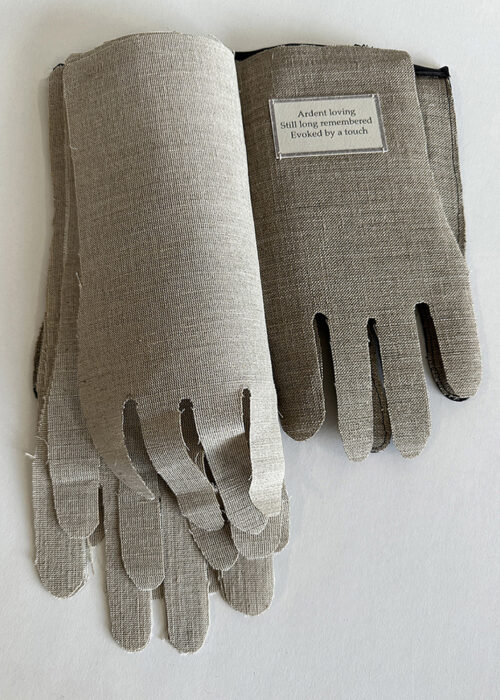
As my sewing skills are meagre I decided to use this orphaned glove for the theme ‘Seam’. Mainly because it involved unpicking rather than sewing.  I love the three raised seams on its back of the glove, I don’t know the significance of them is but they are very satisfying. I liked the contrast of the supple glove leather and the linen stiffening I used to create the pages of the book. They feel like memories of the things the hand in the glove has touched.

On the penultimate page I sewed I the following haiku. 

‘Ardent loving
Still long remembered
Evoked by a touch’

Gill

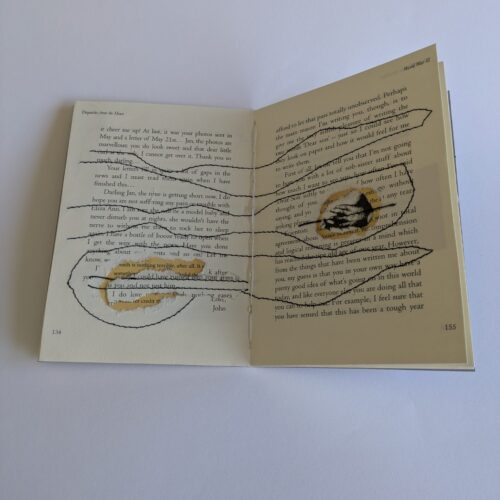
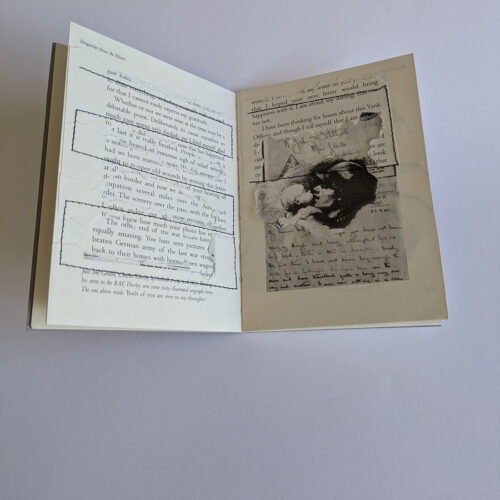
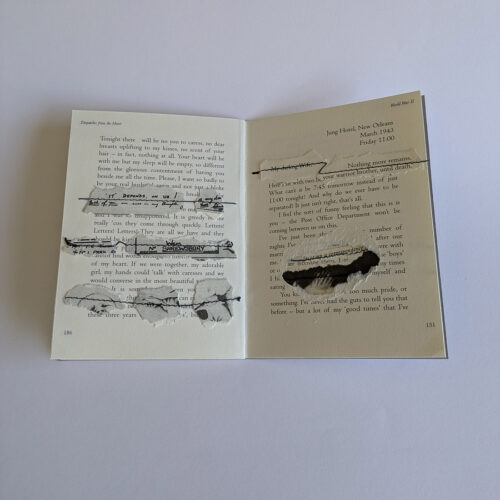
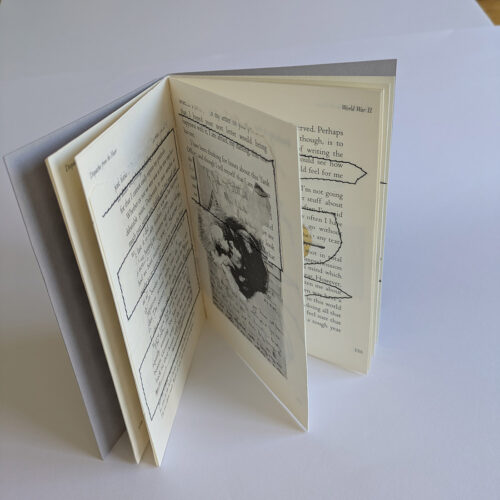
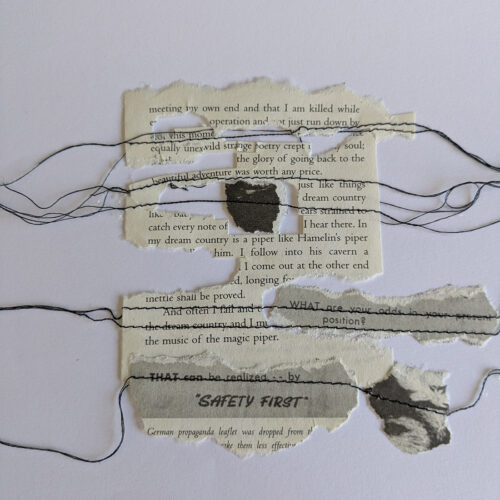
For the topic of Seam I chose to explore the idea of stitching words together. I de-constructed pages from a book, tearing and ripping holes in the pages, removing words from the narrative and placing them on different pages. I stitched the fragments back together using black thread onto dissolvable fabric. I then stitched the pages back together to make my own book. The book is not intended to be ‘read ‘.

Dawn

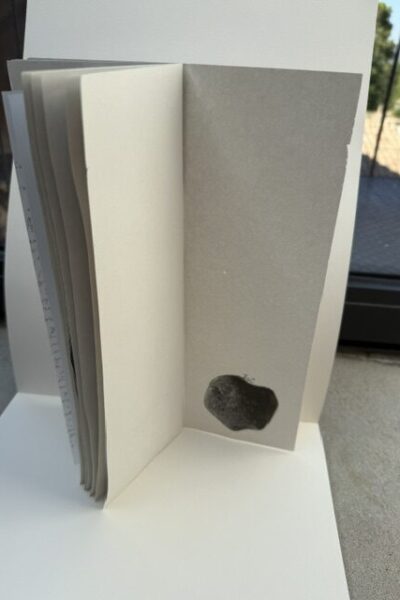
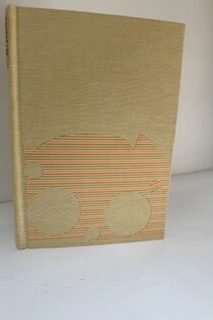
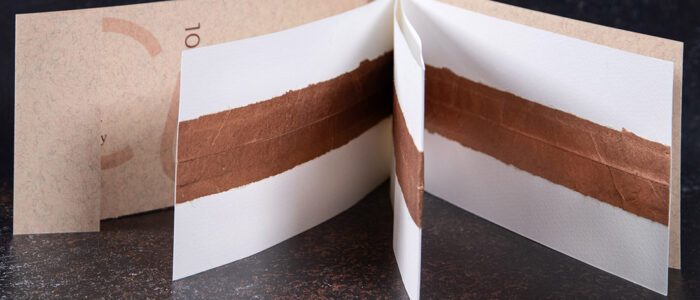
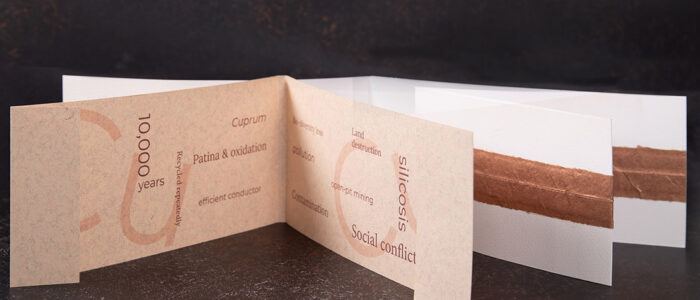
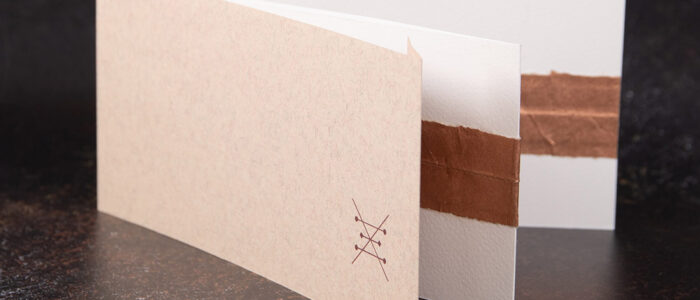
This month’s theme inspired two book ideas. Firstly, geological. A seam of copper. Such an important mineral in so many ways but there are also consequences for how it is being mined. I kept this simple, a wraparound cover and a literal ‘seam’ made from stitched copper Lokta paper.

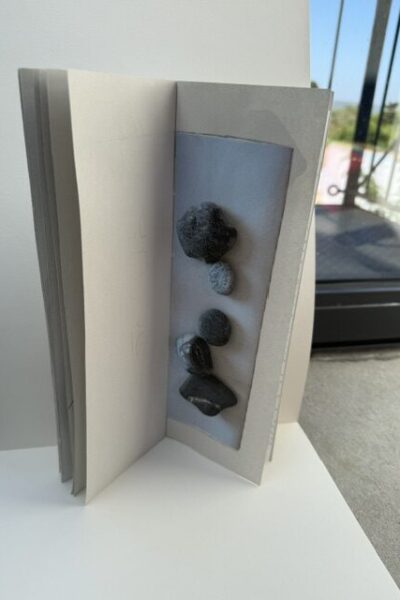
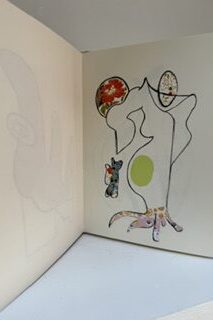
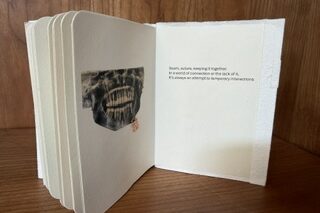
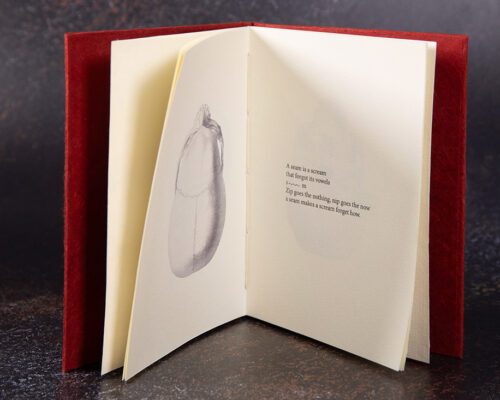
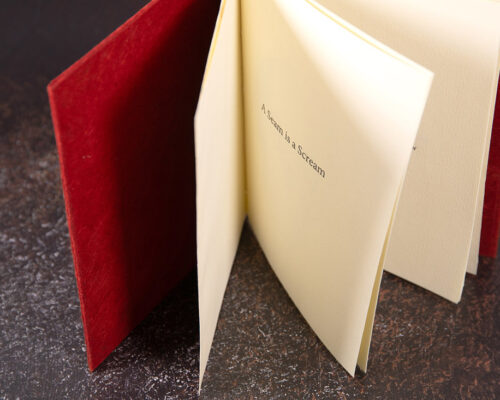
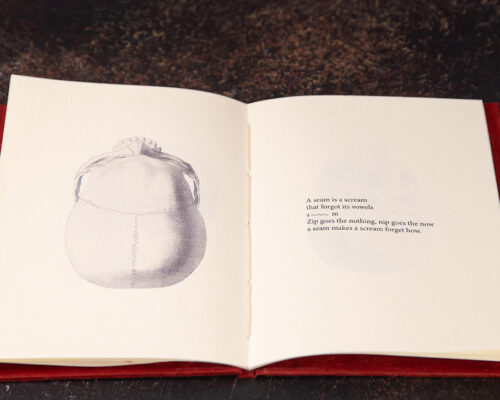
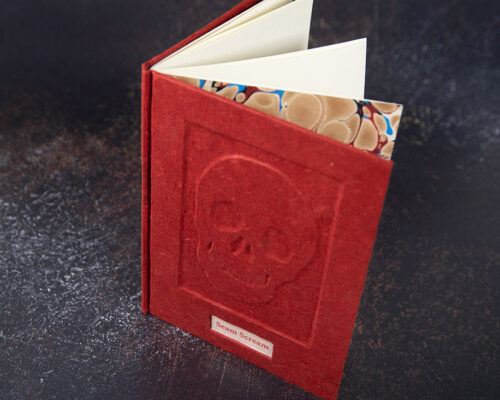
Seam scream, came about as a word association game based on the theme. It took me to the seams (usually referred to as sutures) in our skulls. I wanted the book to have the appearance of an abandoned dusty old tome perhaps found in an antiquarian bookshop or Hogwarts library. The Dadaesque narrative is like a book of spells. It finishes with the lines – ‘but every body is made of seams.’

Collaboration – miniature books

One of the founding principles of London Artists Books was collaboration and mutual support. We meet monthly to share our work on that month’s ‘theme’ and to plan joint activities, which include sharing skills and information.

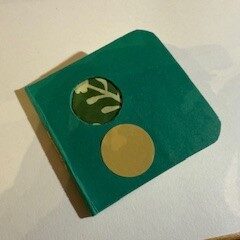
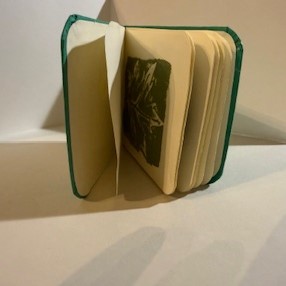
Early in 2026, we completed a project, producing miniature artist books. Tamsin @tamsin_james inspired us, with her gift of putty rubbers and Gill @gill.jenkins.969 provided some one inch square examples of how we might approach the challenge. As always, although we were working independently to the same brief, the outcomes were all different and fun.

The artists who took part were: Tamar Balakjian, Tony Broad, Wendy Falconer, Joan Higgins, Tamsin James, Gill Jenkins, Isi Marcoul, Alison Payne and Patti Taylor

Green

Joan

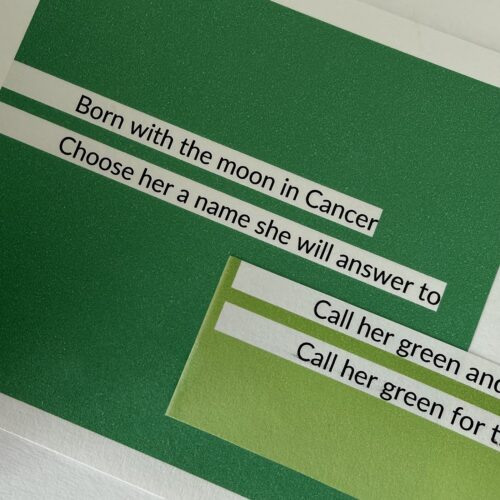
My book for this month’s theme, ‘Green’, was a celebration of Joni Mitchell’s song  ‘Little Green’  written 60 years ago, in 1966. She wrote it for her daughter, Kelly Green, who she had given up for adoption the previous year. She was an impoverished young folk singer, unable to provide for her new baby. The song is poignant, loving and hopeful.

Patti

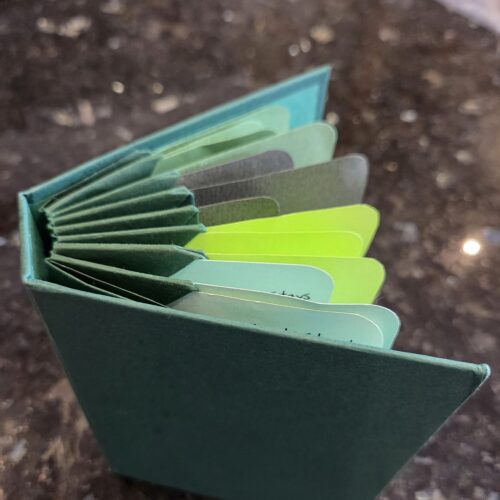
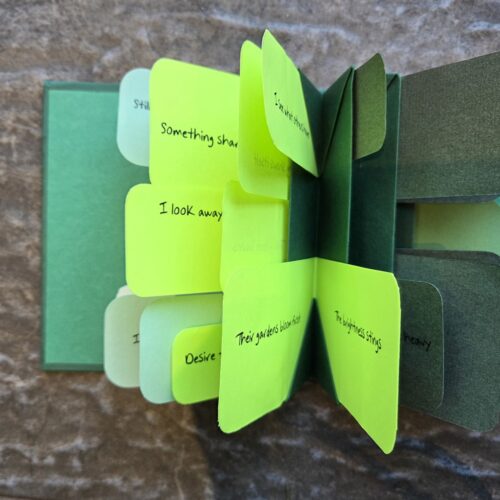
As my colleagues know, I wasn’t much taken with this month’s theme … but I discovered that working on an almost unloved topic challenged me and I had to work harder. I ended up very happy with this little blizzard fold book with inserts in a Belgian binding. All the papers used, including the cover, have been recycled.

I looked at the various connotations for green: new growth, jealousy, bruising, and regeneration, and wrote a few words on each topic.

Tony

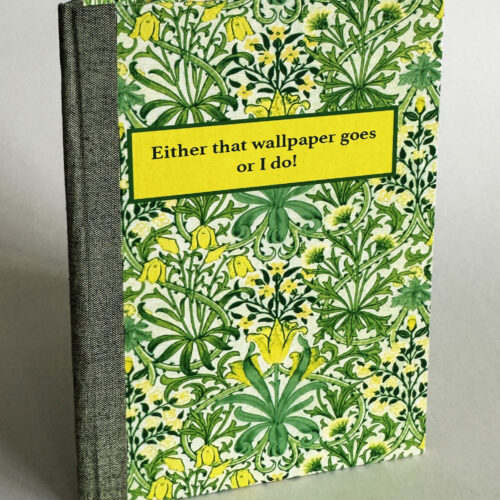
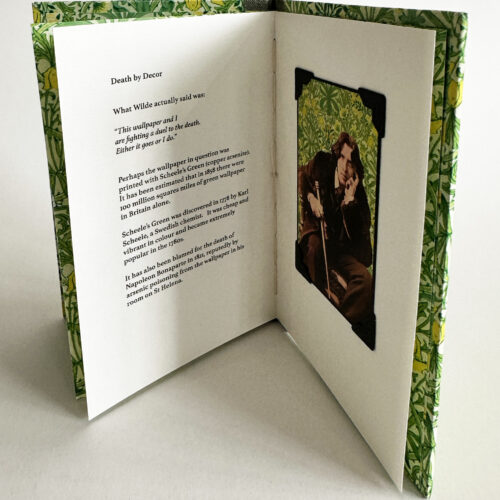
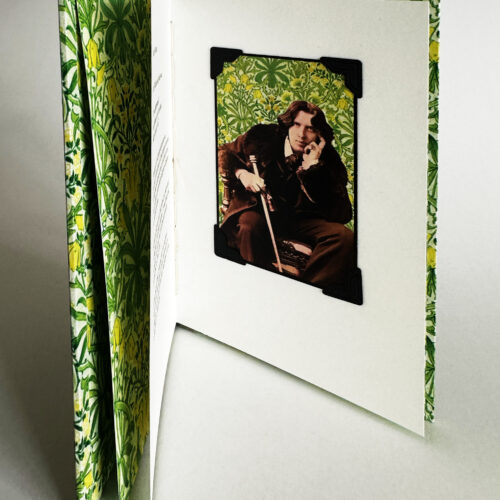
Death by Decor

What Wilde actually said was:

“This wallpaper and I are fighting a duel to the death. Either it goes or I do.”

Perhaps the wallpaper in question was printed with Scheele’s Green (copper arsenite). It has been estimated that in 1858 there were 100 million squares miles of green wallpaper
in Britain alone.

Scheele’s Green was discovered in 1778 by Karl Scheele, a Swedish chemist.   It was cheap and vibrant in colour and became extremely popular in the 1780s.

It has also been blamed for the death of Napoleon Bonaparte in 1821, reputedly by arsenic poisoning from the wallpaper in his room on St Helena.

Wendy

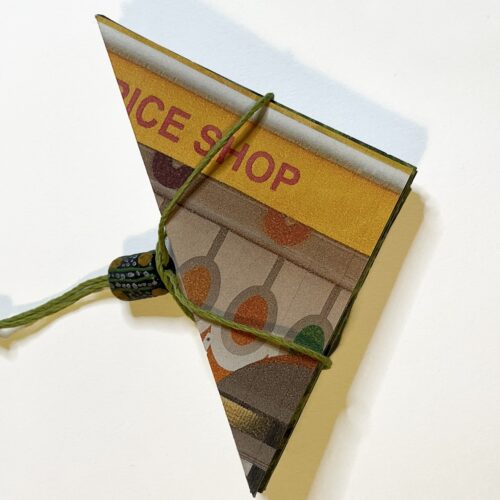
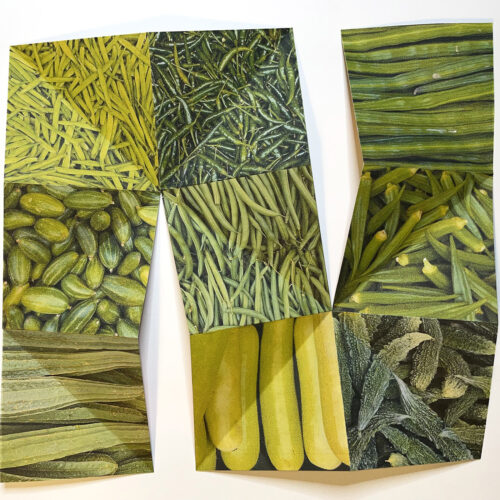
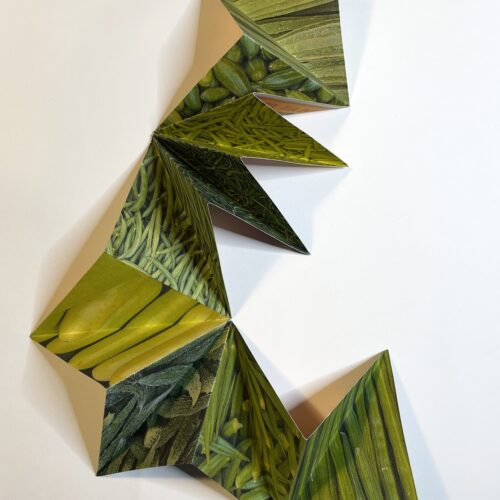
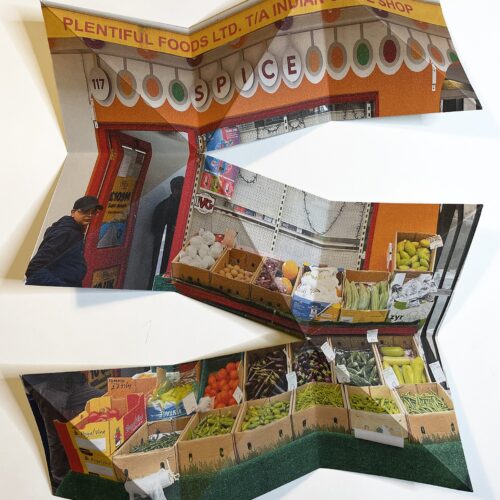
For the theme of Green, I was struck by the colourful array of vegetables outside the Indian food shop on Drummond Street. The geometry within the display suggested the book format.

Alison

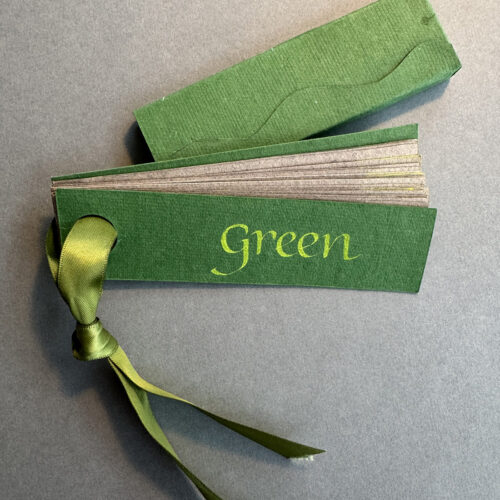
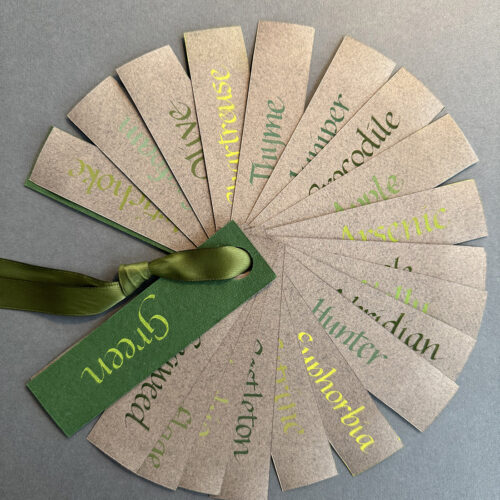
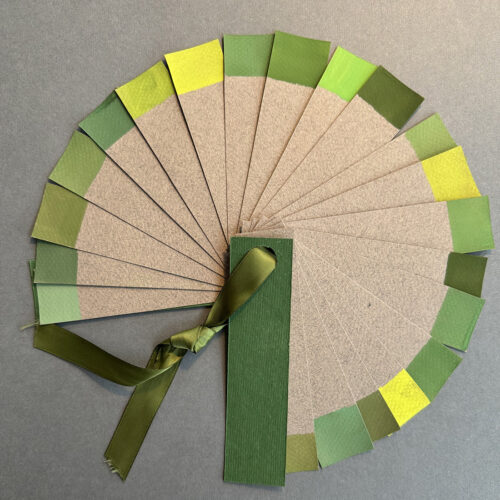
I  found ‘Green’ a particularly inspiring theme and couldn’t help but produce 2 books. The first is purely an exploration of various names for colours of green. I’m fascinated by people’s varying interpretations of colour names and so chose more unusual examples and my own versions. You can turn the book over and play a game trying to guess the colour names as well. 

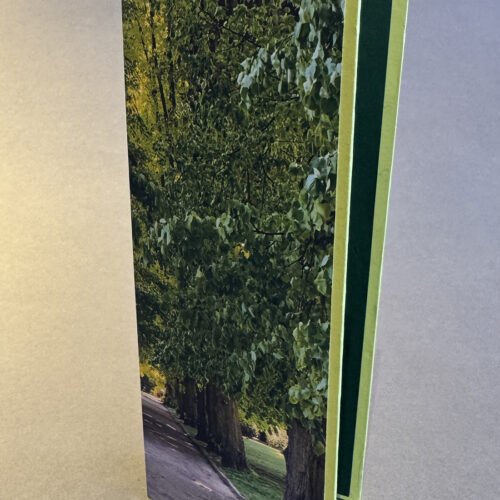
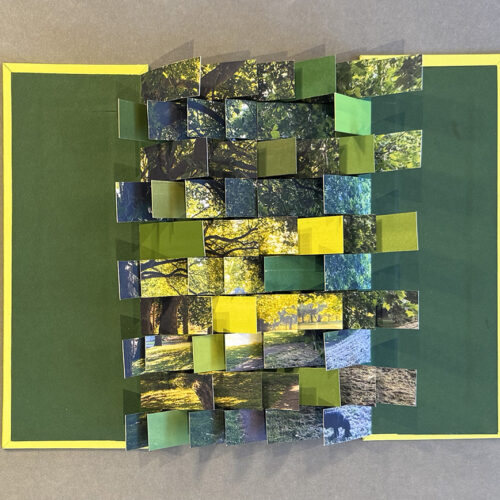
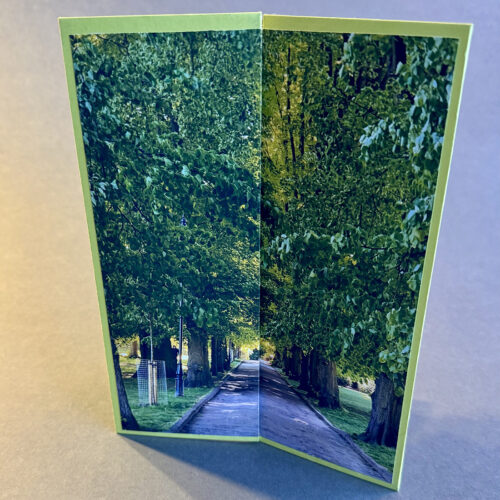
The second book is a flag book made up from a photograph I took at Alexandra Palace Park and interspersed with different greens found in that photograph. The cover is another shot also from the park that comes together when the book is spread open. 

Isi

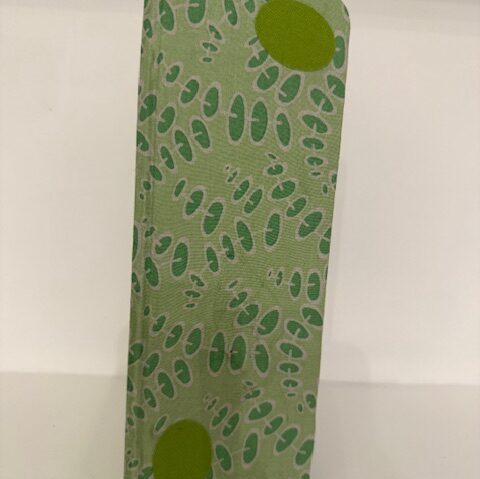
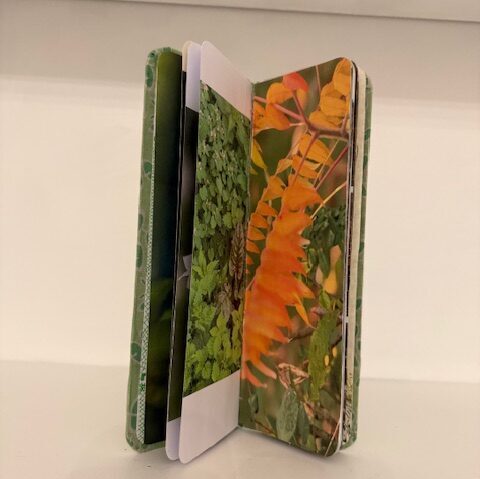
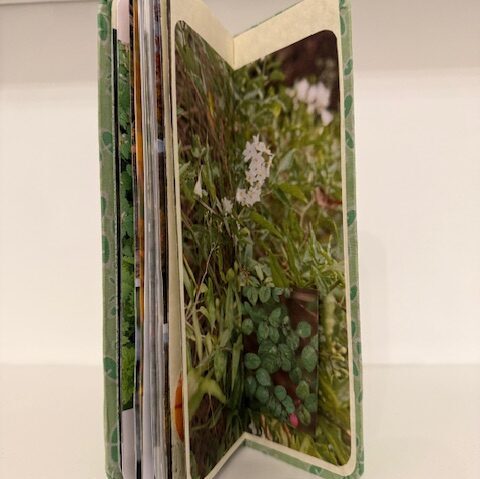
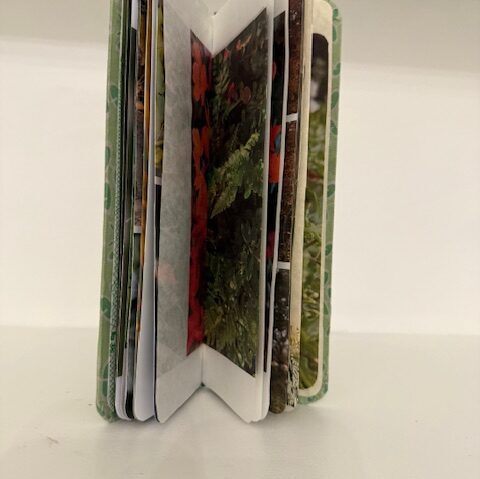
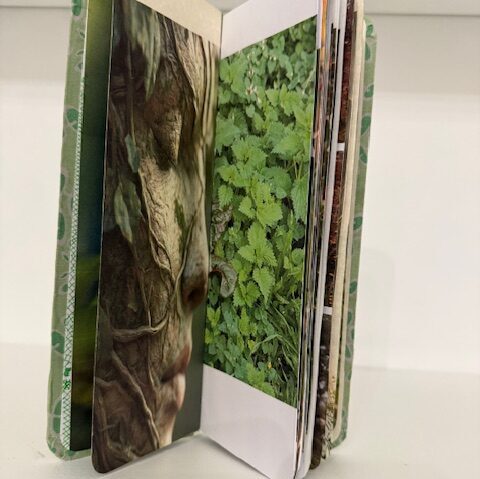
My walk to my local station can be very repetitive so I often take photos of plants, flowers and weeds imagining surreal creatures living in them to entertain myself. So, for the theme “Green” I wanted to use some of these photos and an imaginary “green man” surrounded by green plant spirits! 

Time

Patti

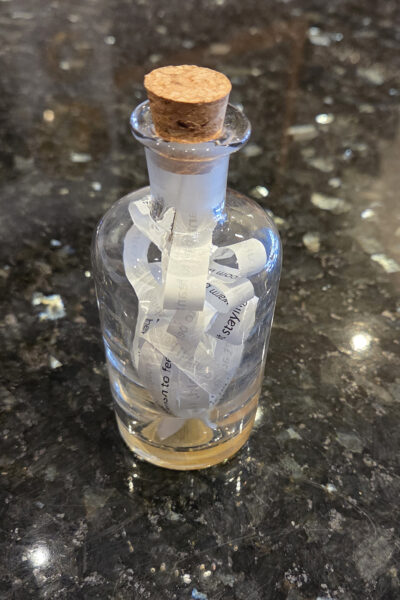
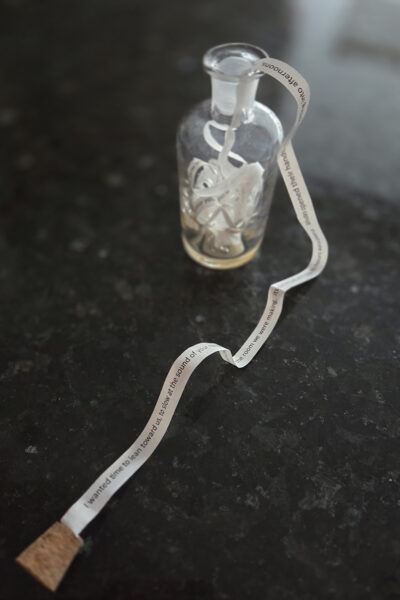
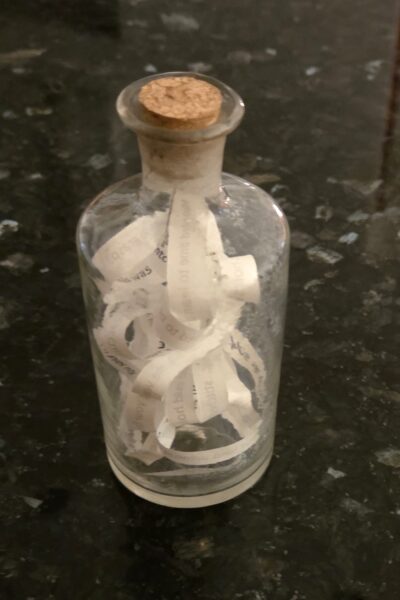
With this theme I was taken back to a song that was important to me as a young, romantic woman—Jim Croce’s Time in a Bottle. I’ve become more cynical over the years—time passes and dreams become disappointments—reality steps in. I’ve written a new version and again, time is in a bottle.

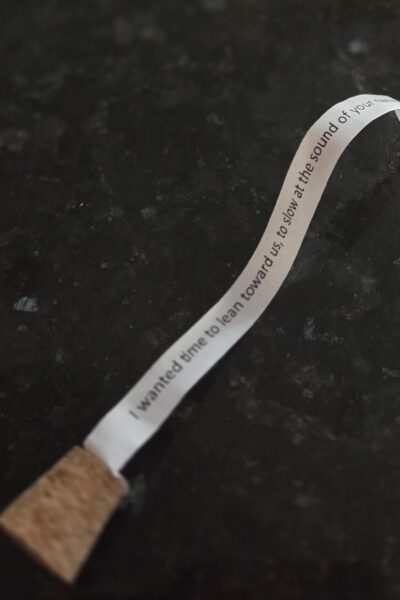
Inkjet print on bible paper held in vintage apothecary bottle.

You can read the text here.

Tony

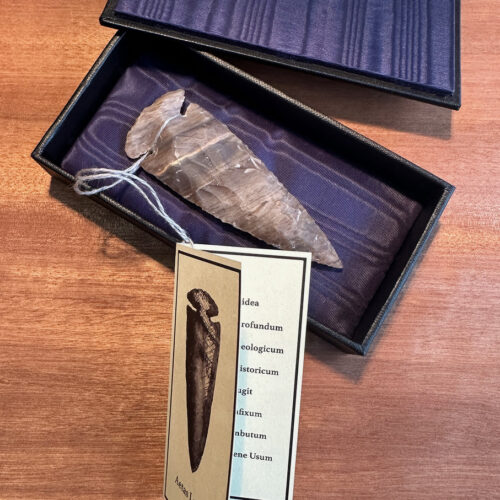
Thinking about the prompt ‘Time’, I wanted to use a found object that embodied many layers and descriptions of time.  For me this knapped flint spearhead does exactly that.

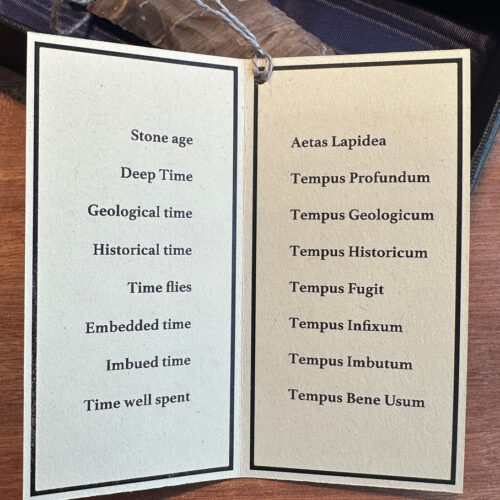
I decided the most effective way to draw attention to the idea was to form a list of references to time. This would allow people to think around the range and scope of theme.
To echo the work and time involved in creating the spearhead I created a luxurious padded box to contain the flint. The end result feels like an object that belongs in a cabinet of curiosities. I translated the list into Latin, referencing how knowledge was kept behind a linguistic firewall when Wunderkammer were at the height of their popularity in the 16th Century.

Gill

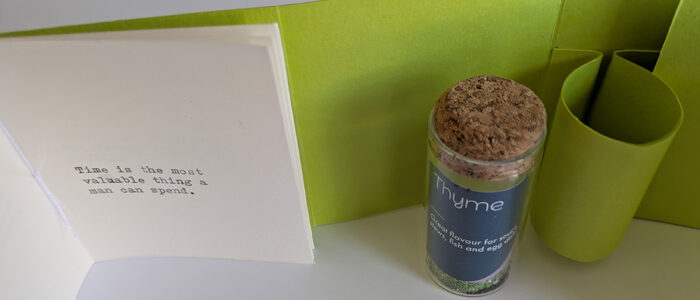
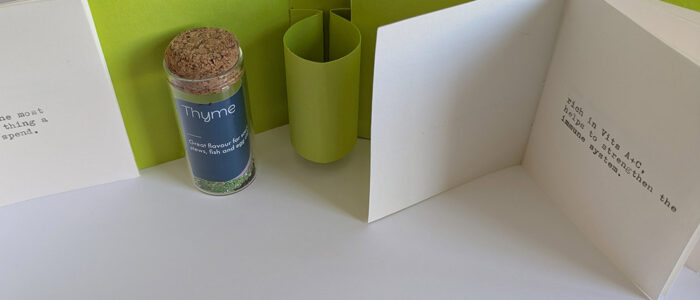
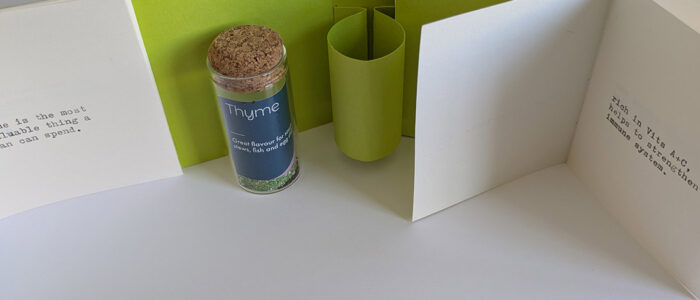
For the theme of Time I made two small books: one that contained quotes about Time, and the other contained facts about the properties of Thyme, the herb. In the centre of the construction is a small bottle which contains some Thyme seeds. The vessel is intended as a time capsule for future observers.

Isi

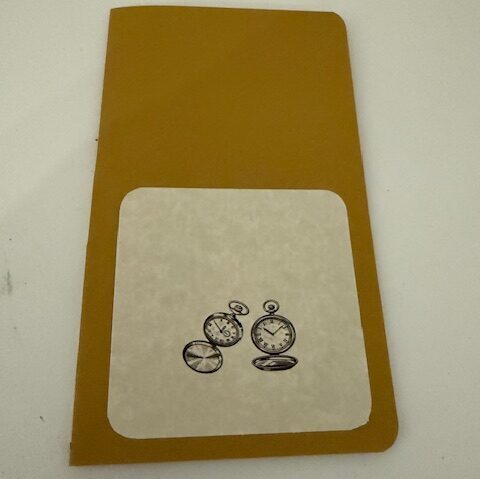
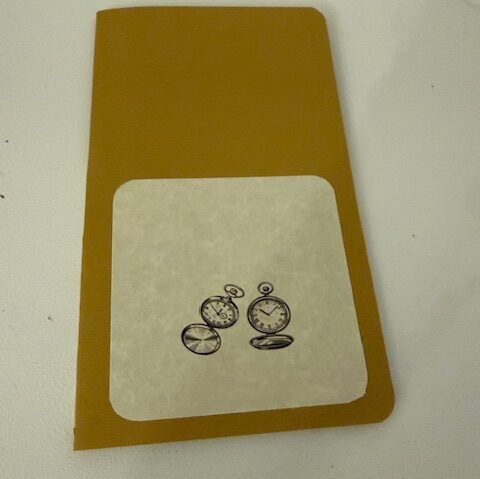
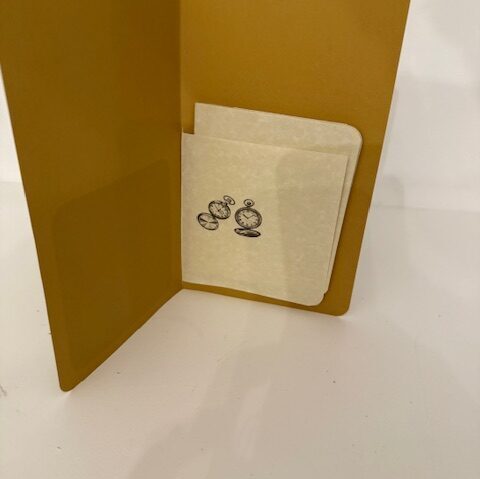
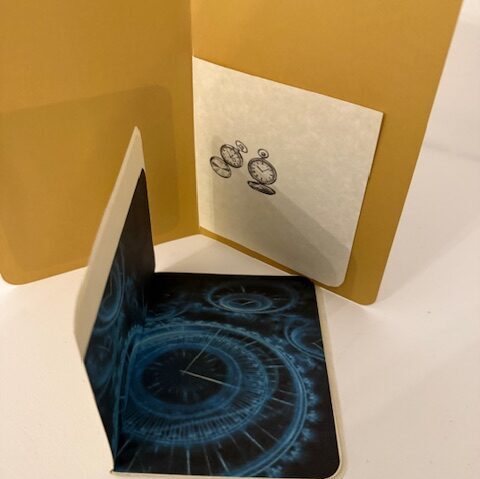
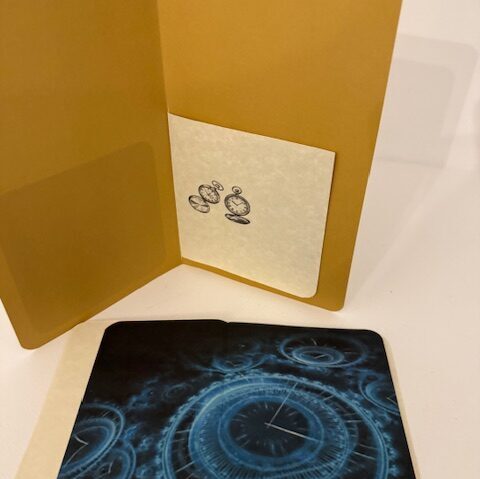
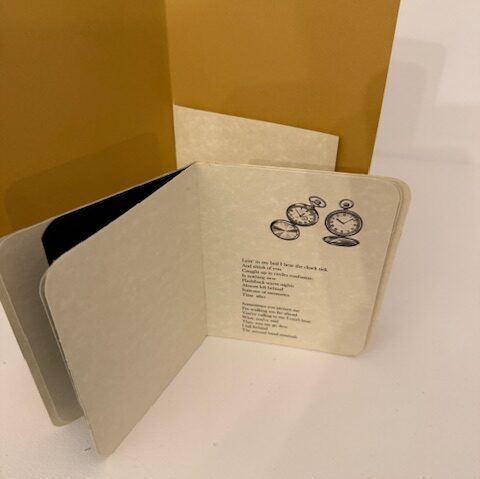
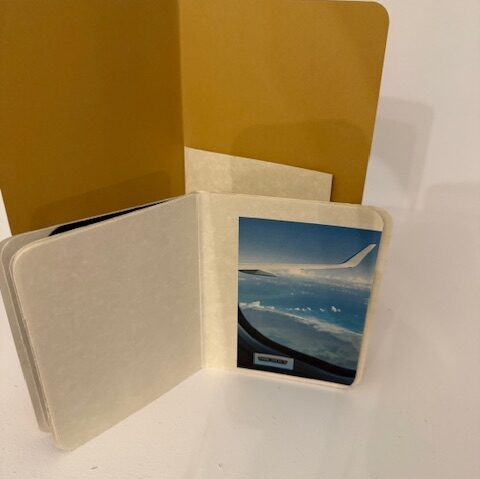
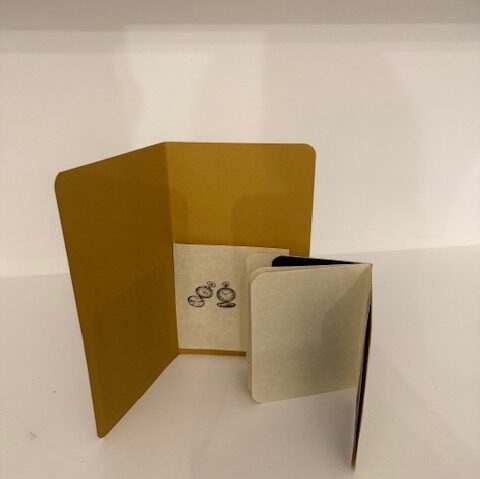
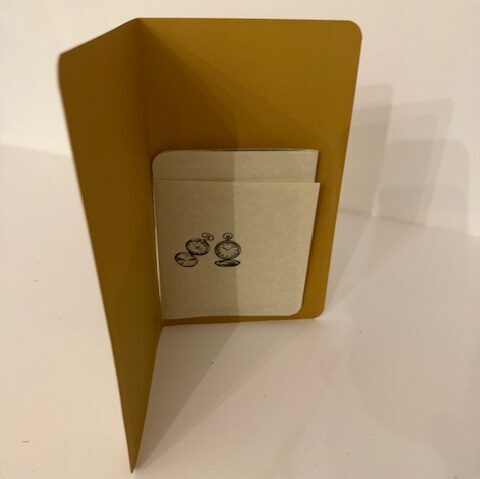
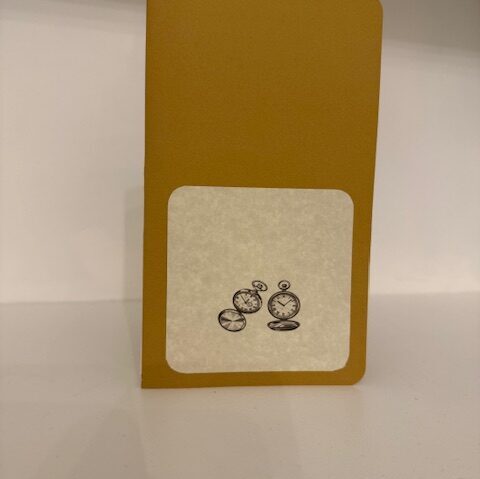
For the theme  “Time”. I designed this simple pocket to host a small pamphlet book.

To illustrate the notion of Time I used text based on the  lyrics from two songs. One is “avec le temps” a very moving French song made famous by Leo Ferre, the other is “Time after Time” by Cyndi Lauper, which reminds me of the deep love, loyalty and loving we, human beings, can feel towards other human beings year after year.

I also chose prints of a watch that reminded me the one my granddad had. Nothing better than Granddad who was timeless and finally a photo of a plane as a time when my husband had to fly back and forth from London to the US every week as a symbol of our enduring love.

Joan

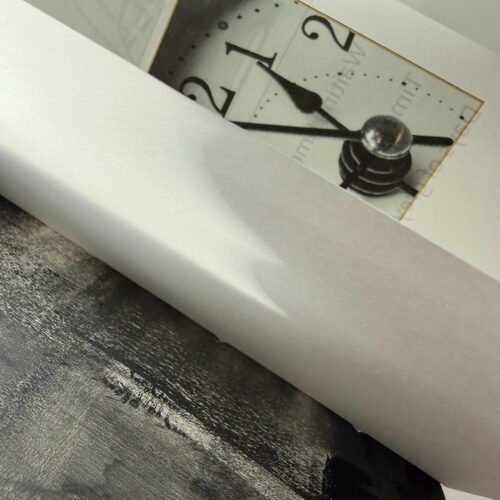
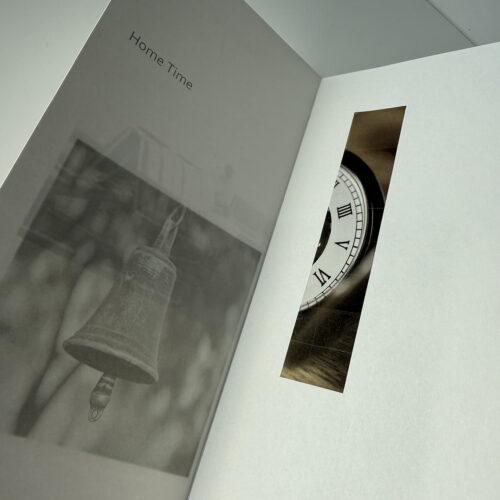
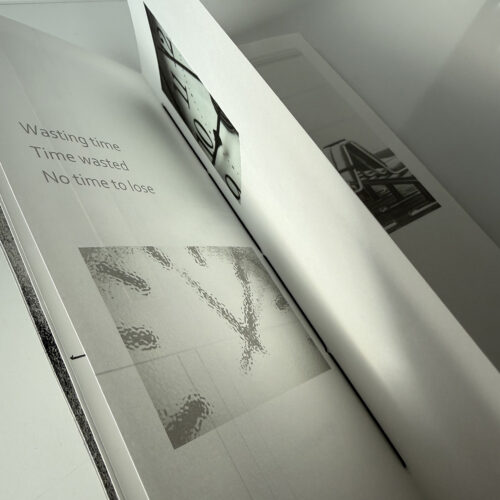
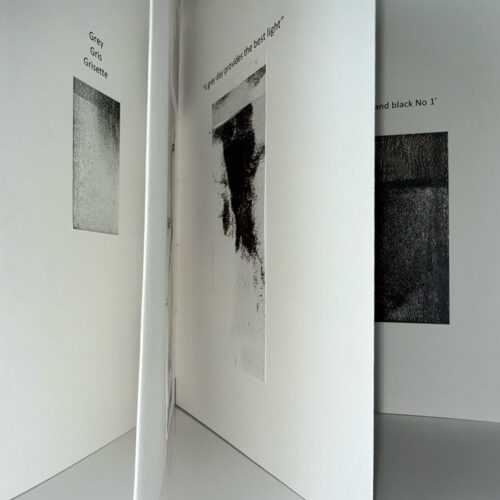
This is a simple pamphlet book, with laminated printed covers. It includes collaged images and pen and ink. I made the book because I was thinking of the very abstract notion of time. Although it can be measured precisely, the sense of time – and time passing – is a very subjective experience. I was also curious about the notion that time can be ‘owned’ – that I might be wasting or saving  ‘your’ time or my own time. This book doesn’t remotely do the subject justice but it is the beginning of something I might develop further.
A line from a book

Tony

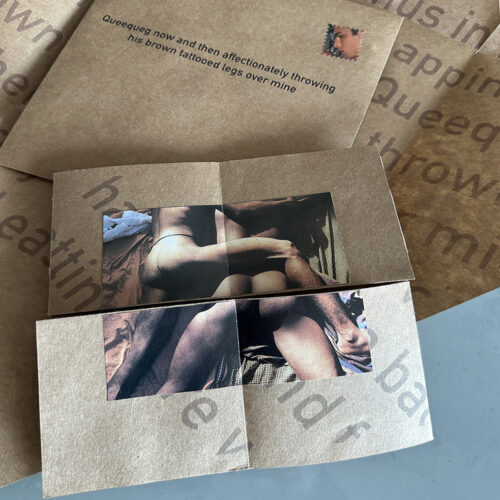
The theme of choosing a line from a book that meant a lot to me instantly made me think of a sentence from Moby Dick by Herman Melville. I read it when I was about 11 or 12 years old and the sentence 

Queequeg now and then affectionately throwing his brown tattooed legs over mine’’ hit me like thunderbolt.  

The idea was shocking and exciting at the same time and the scales fell from my eyes. It became a sort of code. Have you read Moby Dick was no longer an innocent enquiry.

I thought the flexion structure was ideal to convey a tumult of emotions and of course all pornography should arrive in a brown paper envelope!

Alison

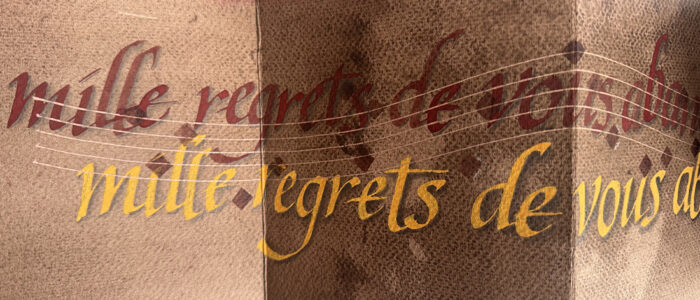
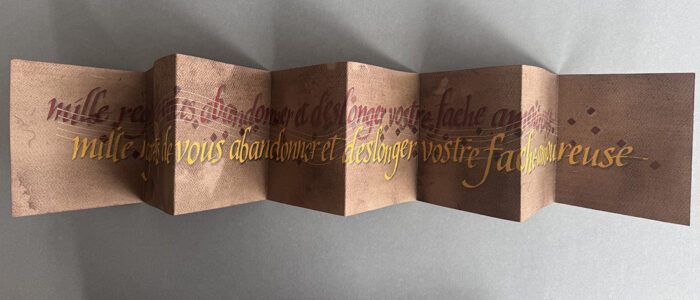
I have been grappling with lines from Mille Regretz, a 16th century chanson attributed to Josquin des Prez, for several years now and thought I would have another stab at it. Trying to convey the feeling of multiple voices singing these beautiful and meloncholy words that float through a space (given the work would have been performed in a church) has stumped me. I have tried some three dimensional approaches and now this purely calligraphic piece, but very much stil working on it. 

Gill

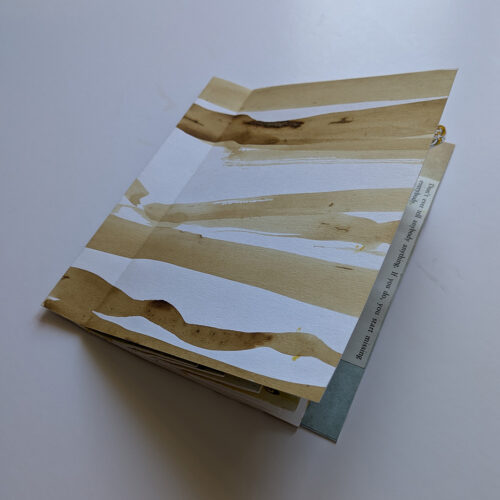
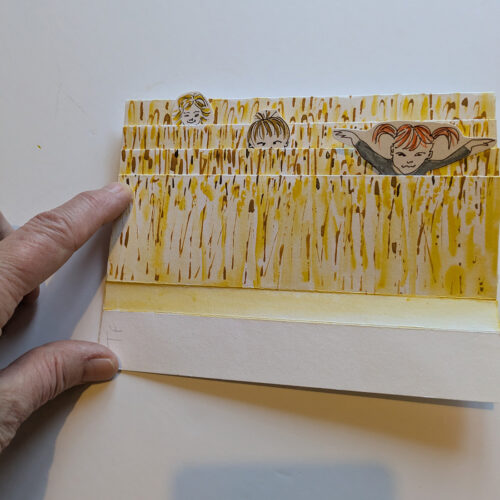
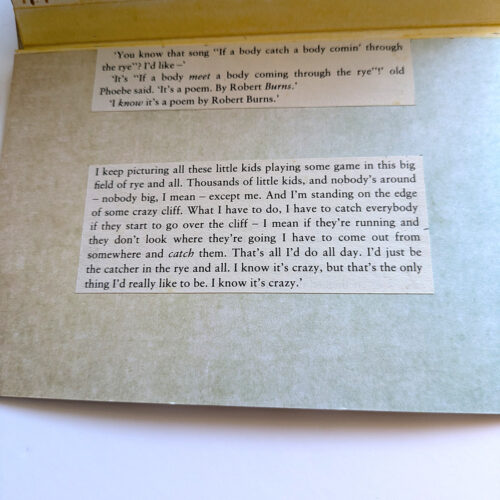
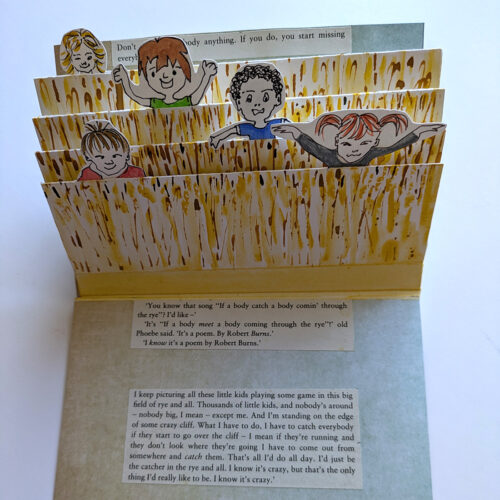
“Don’t ever tell anybody anything. If you do, you start missing everybody.” Catcher in the Rye.

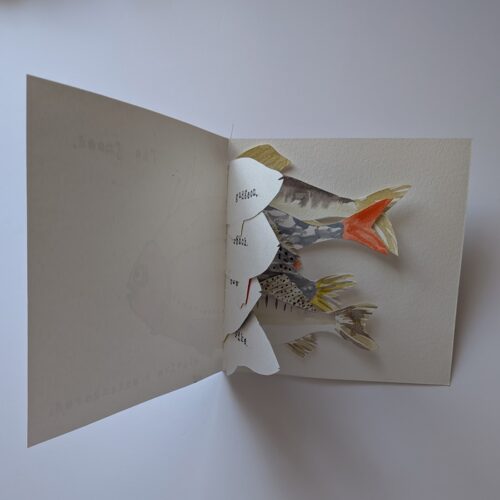
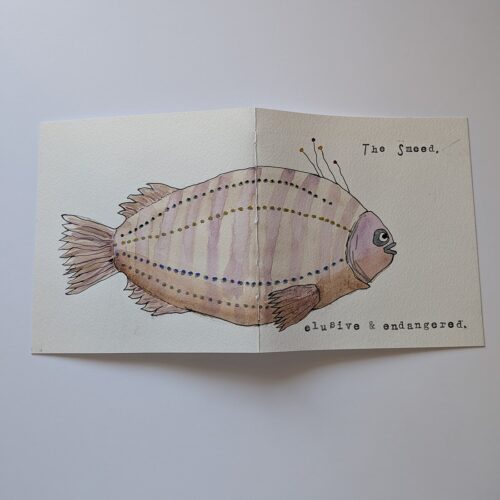
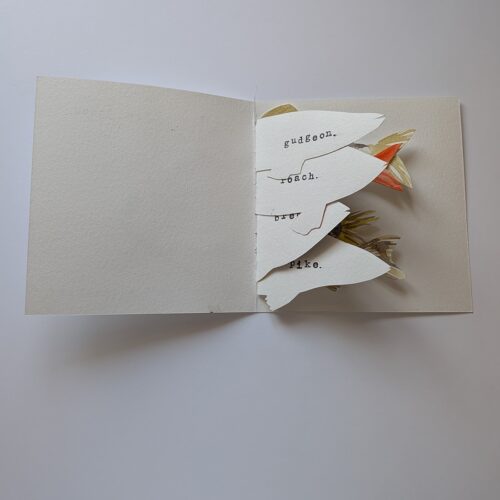
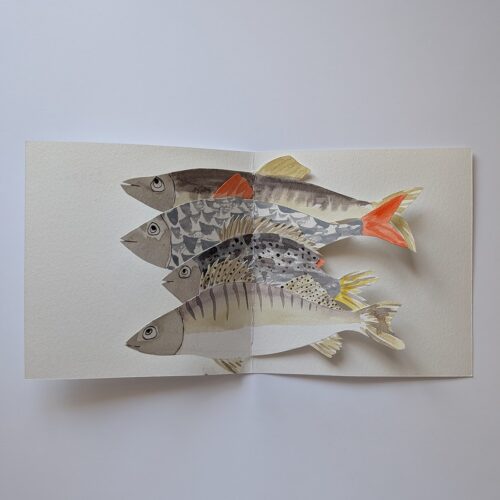
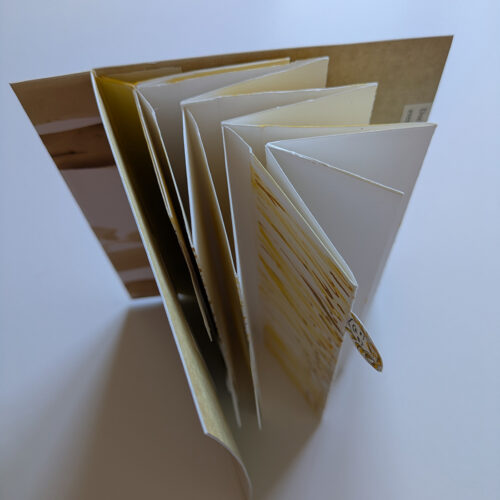
Fishtail method construction with popup children.

Isi

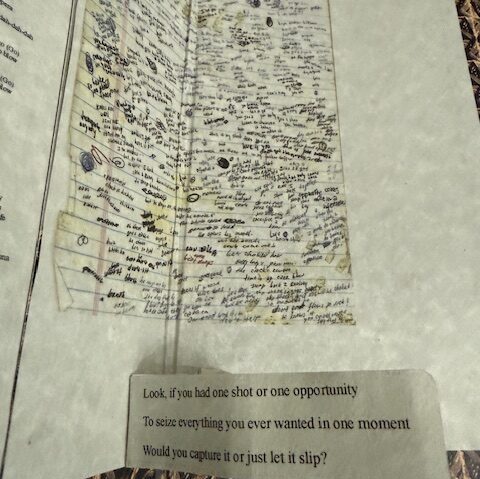
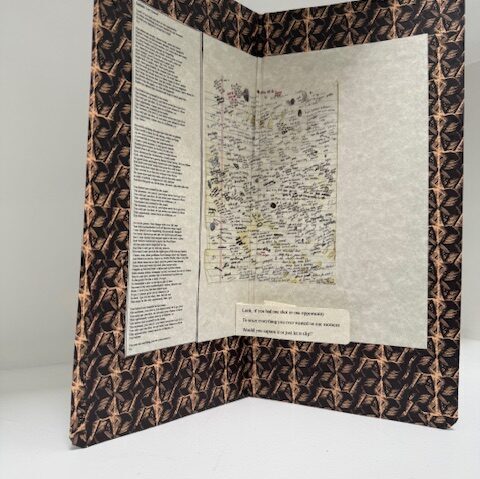
 For the January theme “One line from a book” I chose the lyrics by Eminem from his song “lose yourself “
“Look if you had one shot or one opportunity
To seize everything you ever wanted in one moment
Would you capture it or just let it slip?”

I particularly like this song for its tempo and obviously its great lyrics that build this growing sense of pressure, emergency and how our lives can change, in an instant, after one opportunity.

It’s an illustration of how life and our decisions slowly paint the full picture of our existences.

Joan

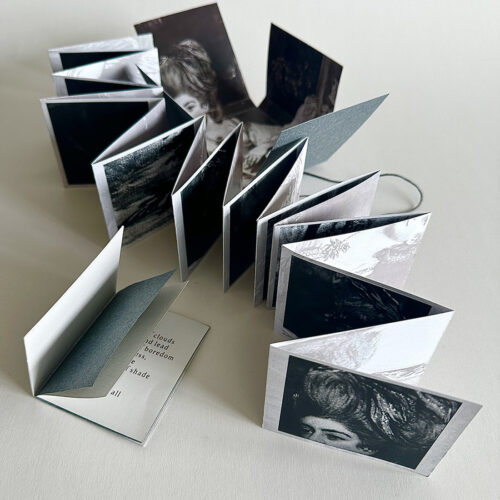
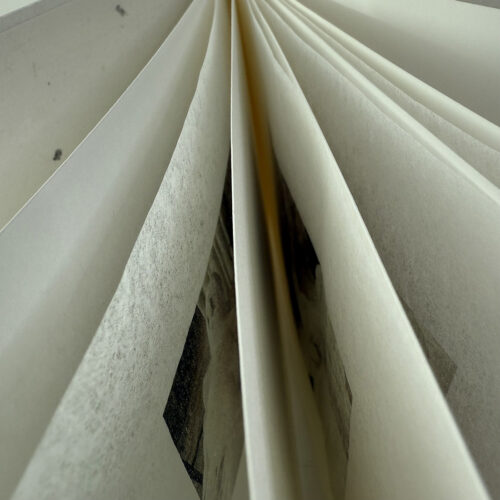
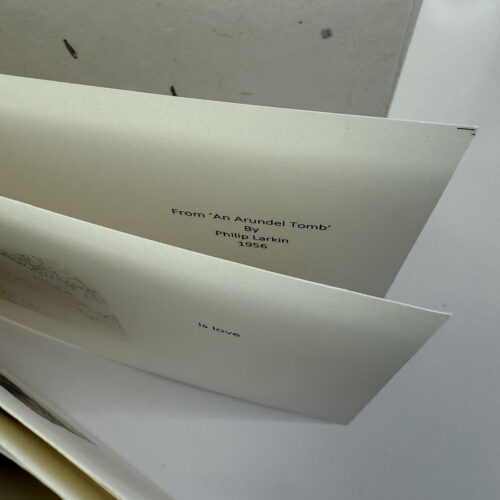
My response to the LAB theme in January was to make a book in response to Philip Larkin’s poem, ‘An Arundel Tomb’. I have always felt very moved by the final line  “what will survive of us is love”. There are many interpretations of what Larkin intended by this line. He was not a sentimental figure. For me, it is a hope and aspiration – that when we leave this world, we will be remembered for the love we shared and not by material success. The book contains images of the 14th century tomb in Chichester Cathedral, of the Earl and Countess of Arundel, with the couple lying side by side holding hands. The cover of the book is a delicate Korean paper.

Patti

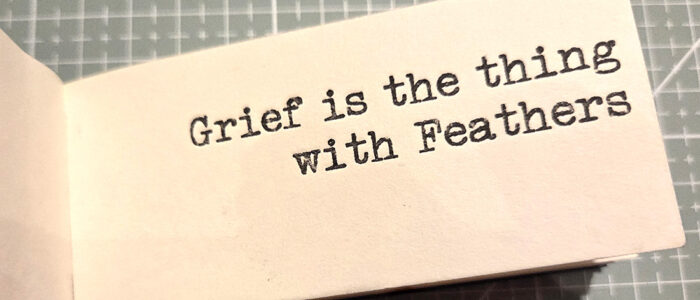
A book which had a very powerful affect on me and was there when I needed it, just after my mother died, is Grief is the thing with feathers by Max Porter (I was also lucky enough to see the play at the Barbican, starring Cillian Murphy).

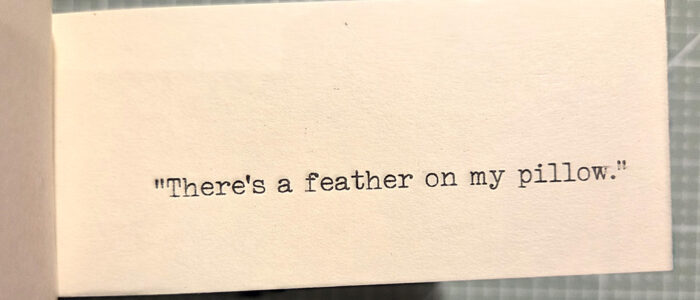
The opening line is simple: “There’s a feather on my pillow” – and so it began.

I made a small, soft covered, flip book with perfect binding, showing how the feathers mounted up every day, until the pillow was almost black.

Holy/Holey/Au Lait

Tamsin

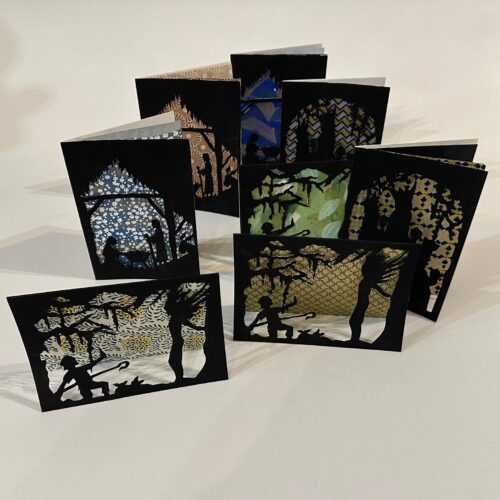
Prompted by our proximity to Christmas, I decided to create cards taking scenes from the nativity. I used the cut-out format, which challenged me to produce images that were readable in silhouette form and could be held up within the frame of the card – holey, as well as holy!

Tony

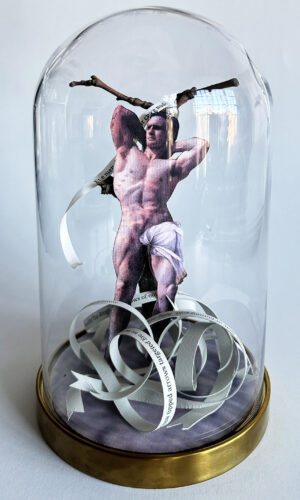
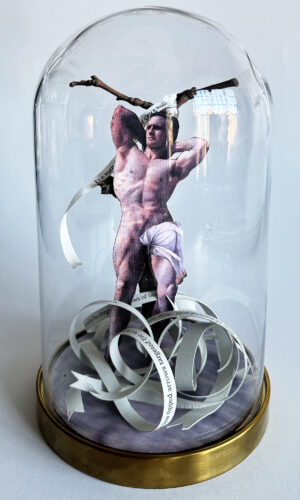
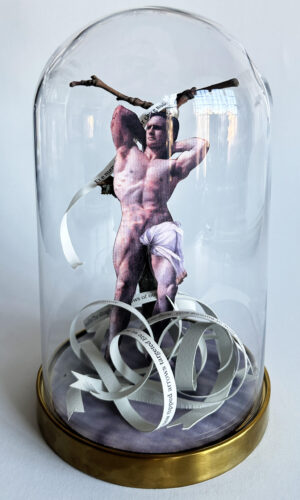
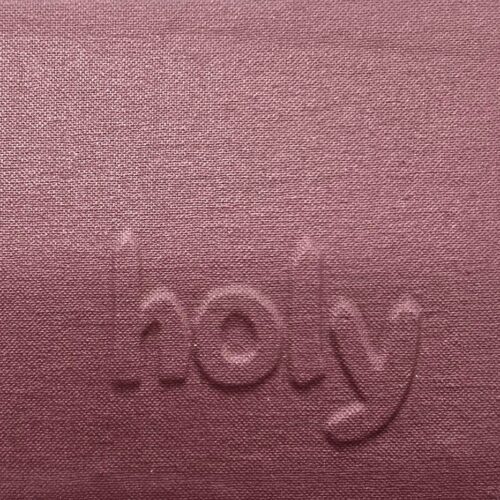
Using our theme Holy as a starting point I continued working on my reliquary project and decided to celebrate St Sebastian.

I enjoyed choosing the body builder image for this work, his impassive, distant gaze echos the demeanour of Sebastian seen in Renaissance works. Rather than depict the actual arrows I used several quotes to reference his martyrdom, including Basciami mill volte, by Luca Marensio  ‘Et e men disarmato all’hor che e nudo’… ‘And is best armed when he is nude’, which I heard performed by Musica Antica last month.

It seemed fitting to me.

Alison

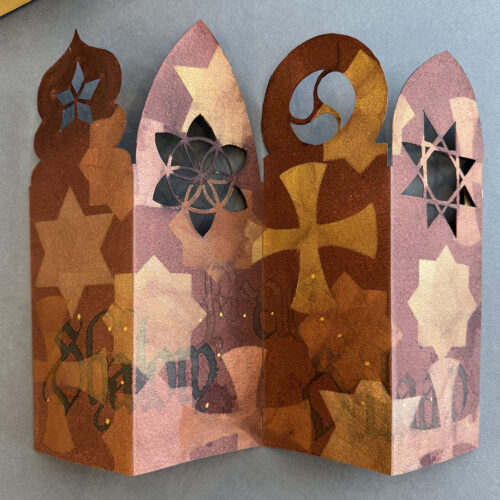
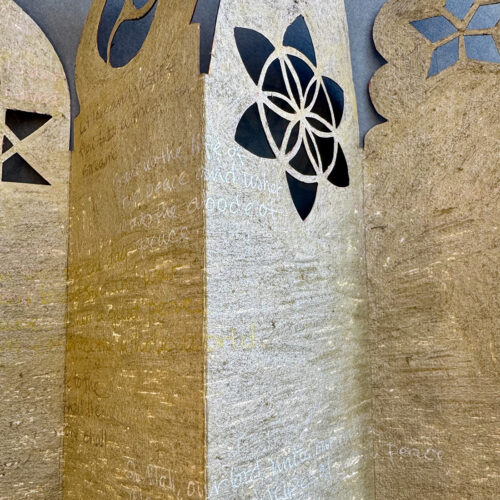
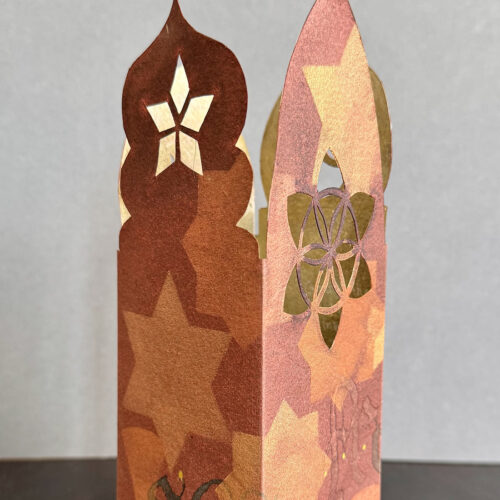
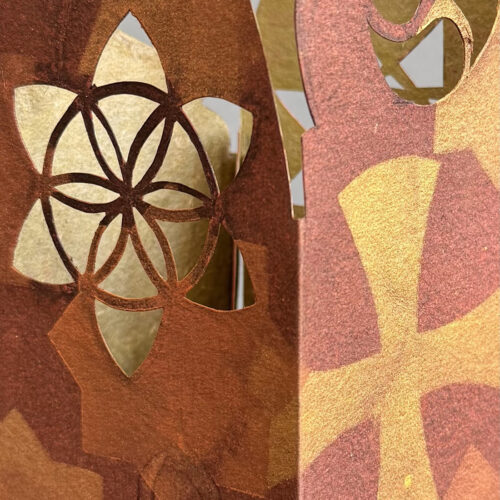
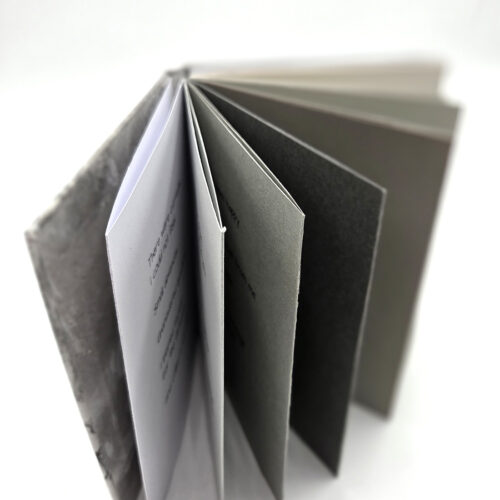
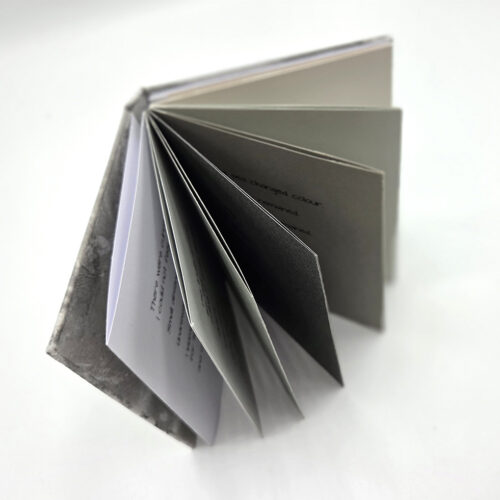
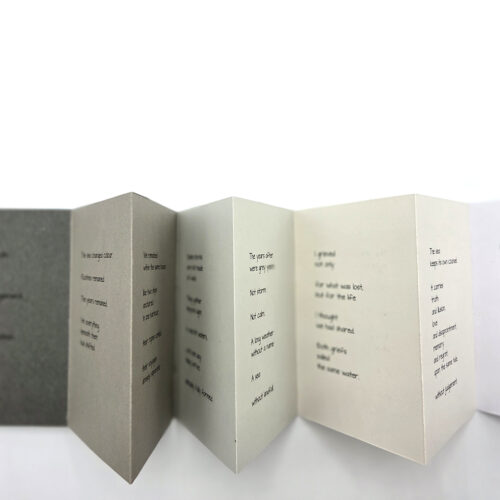
For the theme Holy Holy I have created an architecturally inspired ‘book’ covered on the outside with symbols and the Arabic, Hebrew and English words for Peace. The interior is covered with excerpts from prayers from Christian, Judaic and Islamic texts. Folded up the piece can illuminated from within with a candle. The hand-cut ‘windows’ are holy and the message is both holy and hopefully hopeful. 
Gill

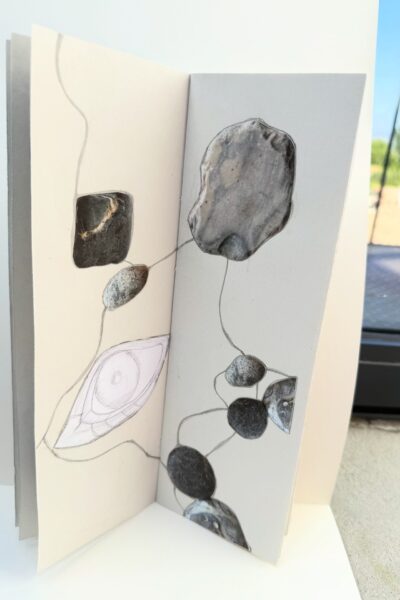
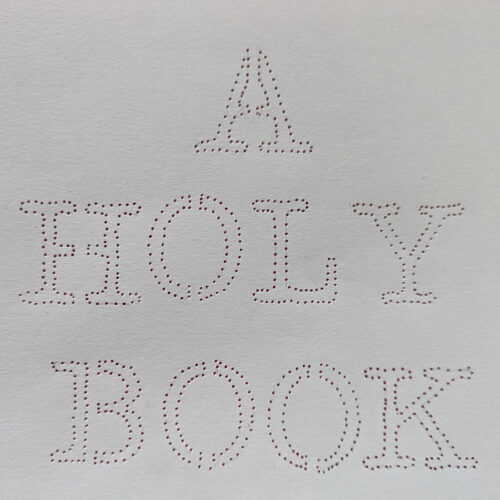
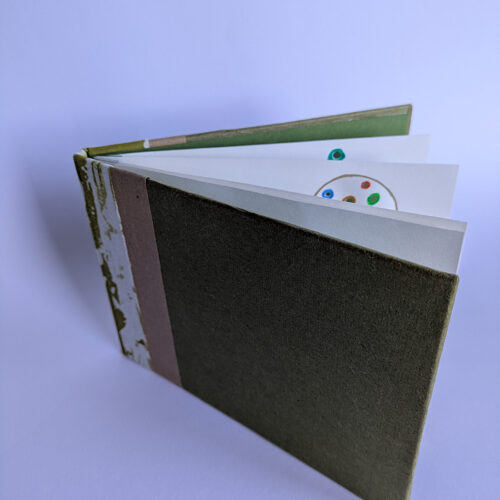
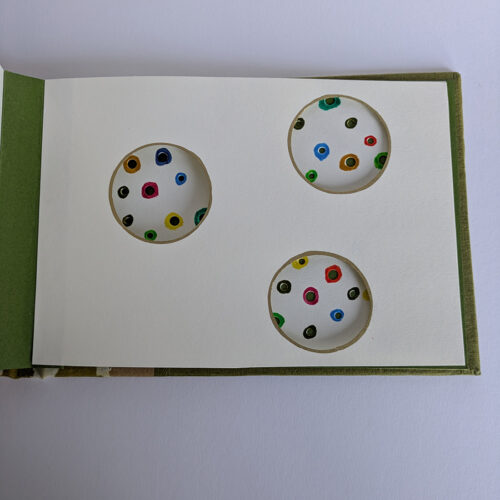
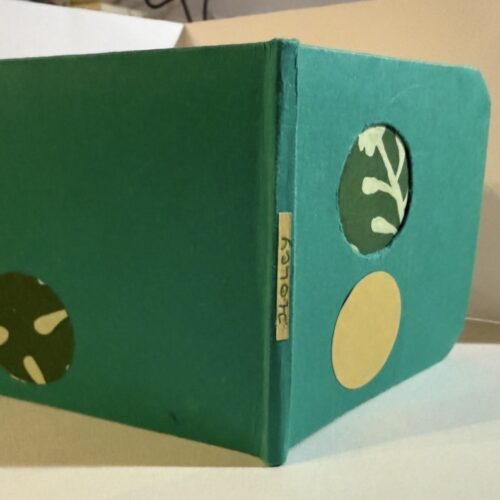
I decided to make a ‘Holy Book’, not a religious book but one I made from holes of all different shapes and sizes. 

Isi

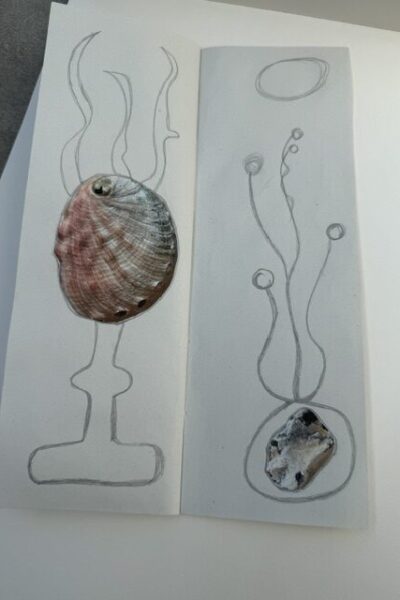
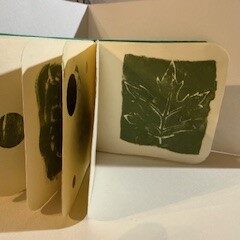
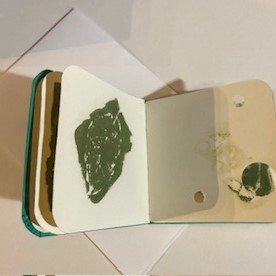
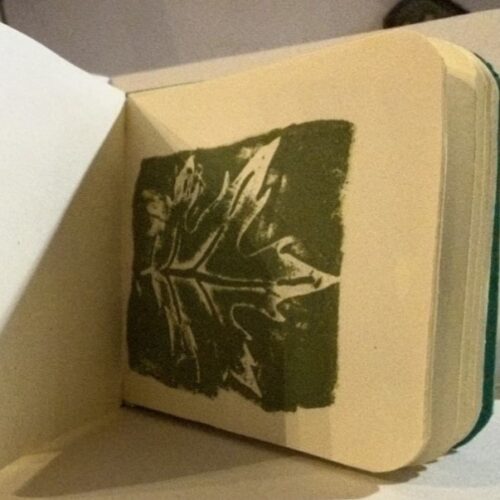
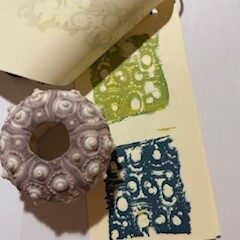
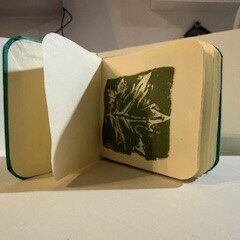
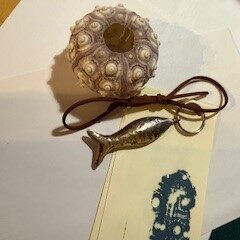
For the theme “holly, holey, holy, au lait” I chose to print autumn leaves on to small sheets of paper using a drawing putty square, and played around with notions and representations of holiness/holly, nature and space. 
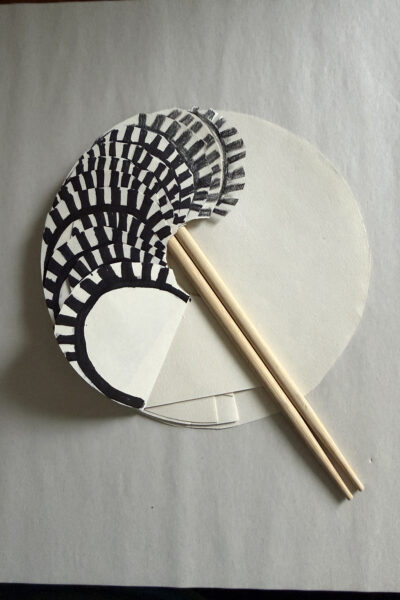
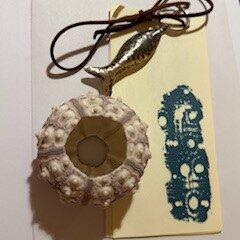
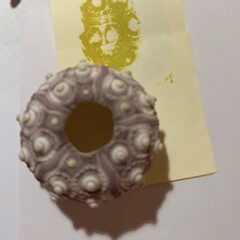
I also used the putty to make prints with an urchin shell. 

The idea was to have two forms of prints bringing together earthy and aquatic items, my way of illustrating a holy combination of earth and water. With the urchin prints I also add a metal fish as the symbol of the Christian identity, iktus/Ichthys. 

Joan

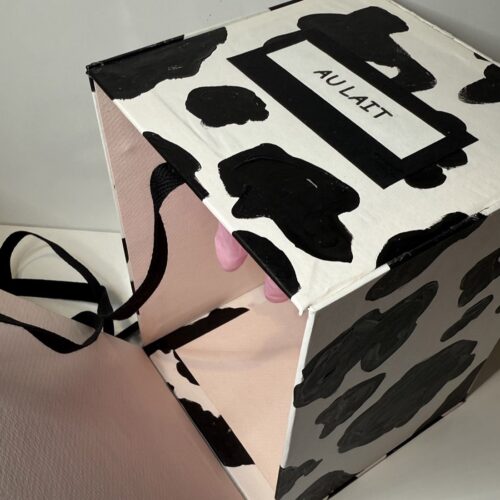
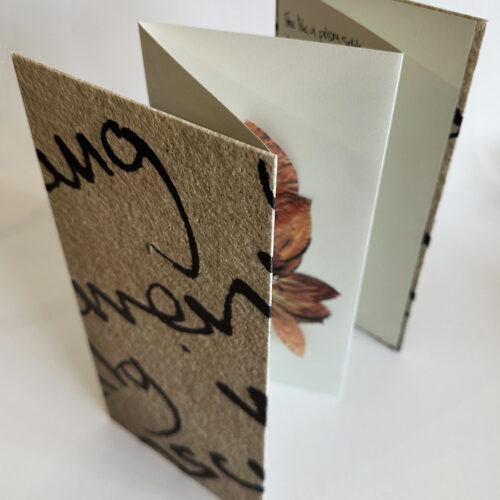
Here’s a cheeky little piece I made for our monthly meeting. It is called Au Lait and, hopefully, speaks for itself.

It is a not very well made box and was just meant to be a fun response to the month’s theme.
Patti

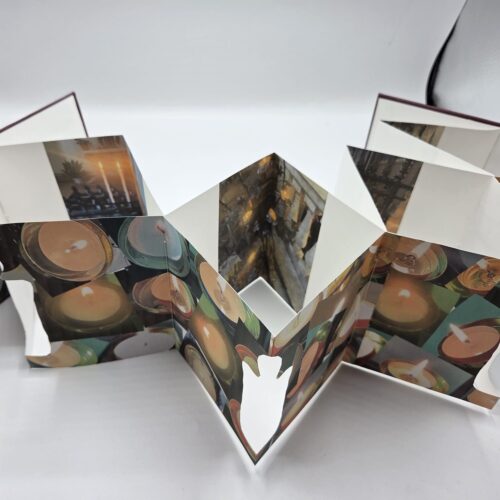
Since my daughter contracted meningitis on Mother’s Day 2024, a dear friend has lit a candle for her at Saturday Mass. If he has his phone with him he sends me a photo. I gain comfort from the strength of his faith and in his kindness. (After my recent very painful knee surgery he has lit a candle for me too.)
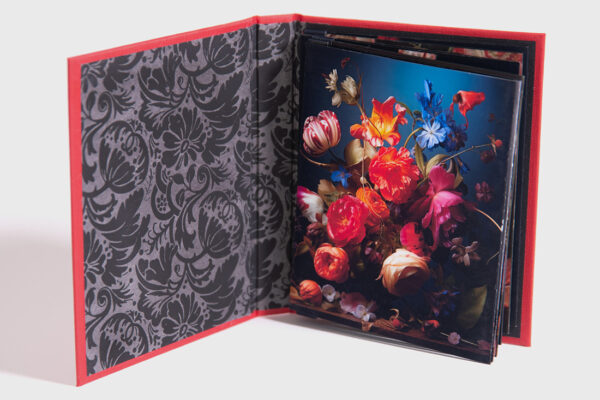
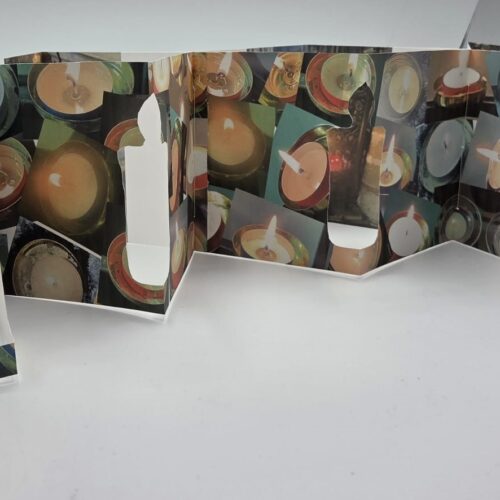
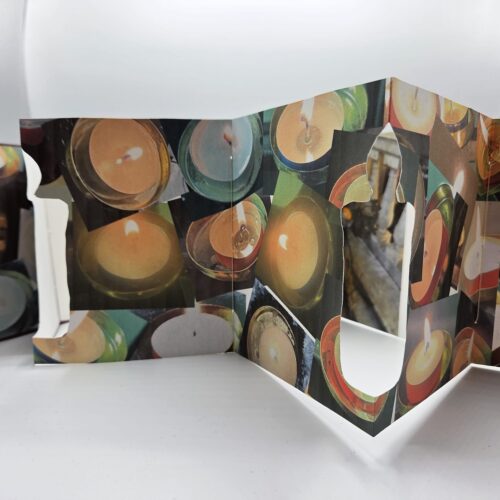
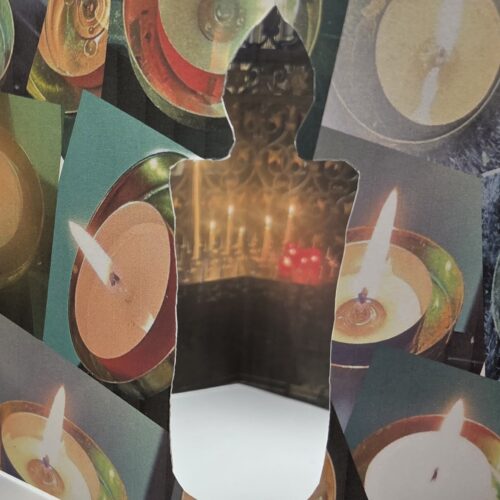
I have made a “Holy” “holey” book using some of the candle photographs on the front concertina. A cutout in the shape of a candle allows a view of the rear concertina which has photographs of votive stands in various churches he has visited.

Tamar

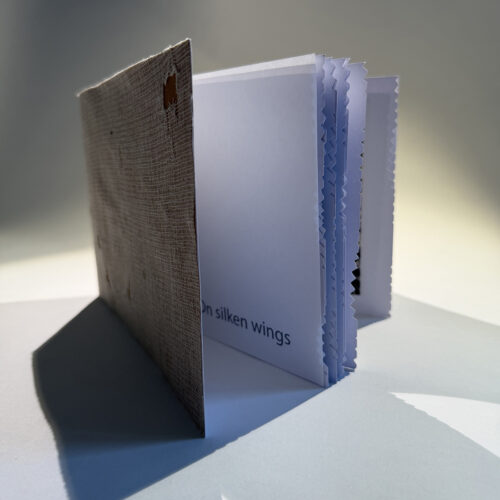
On silken wings the moths are never sated.

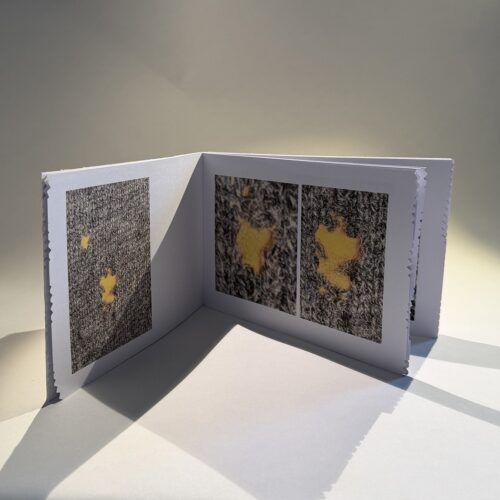
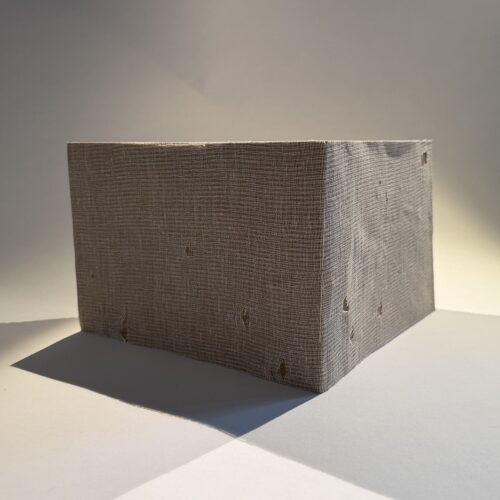
With clothes moths as my creative collaborators (try not to cry), this work documents every moth hole in one of my  jumpers.

Each double page spread has a photo of the hole and then a close up.

I textured the foreedge using pinking shears to make them look nibbled. 

Muslin, book cloth, cartridge paper, layout paper, waxed lined thread

Blank

Tony

The prompt ‘Blank’ made me think of how some people hate the first blank page of a new sketchbook or a blank canvas.  In fact it is called ‘White Page Syndrome’.  Artists sometimes scumble the canvas to get rid of the glaring empty canvas and then imagine what the random marks suggest, a process called Pareidolia.

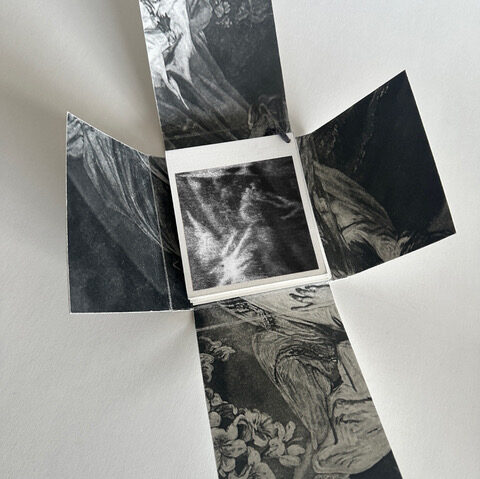
This made me think of the largest of all canvas, the starry sky.  People have, seemingly, always seen gods and monsters shining down on them. I constructed this interlocking concertina book with a blank page intersected by the Milky Way to echo our endless ability to fill in the blank space.

Gill

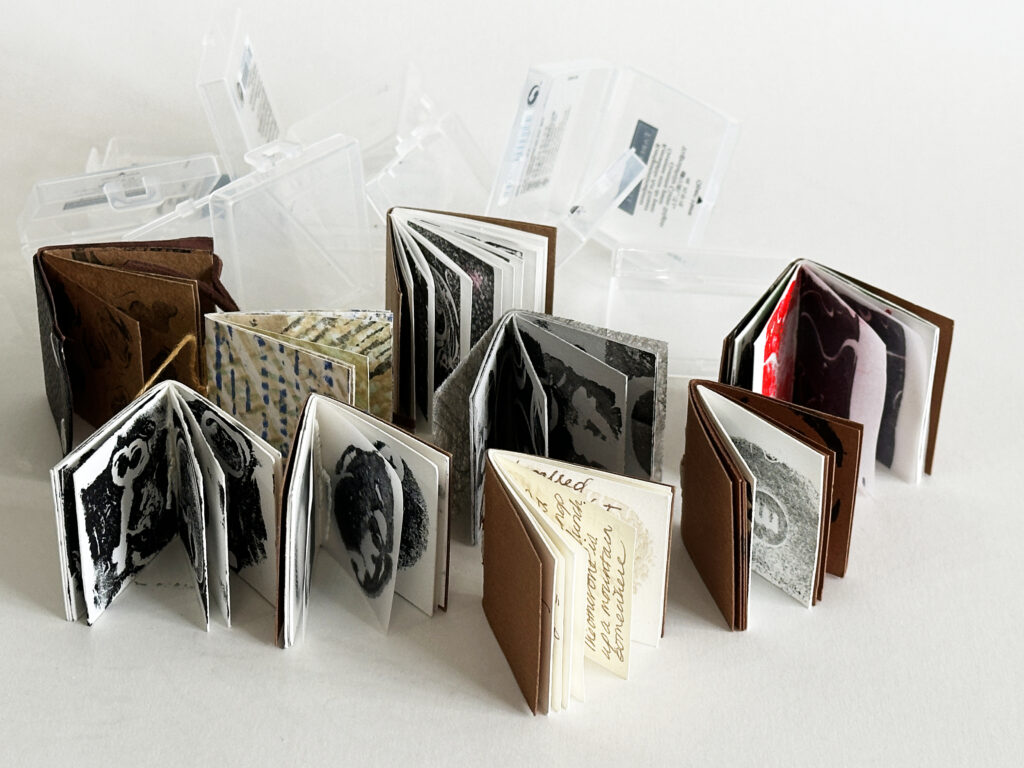
For this month’s theme of ‘Blank’ I created eight small stitched books, each one with different types of paper. The books are very small and relate to a project that we have concerned with taking impressions and then prints from putty rubbers that Tamsin gave to each of us. The books fit inside the plastic case that the putty rubber came in.

Isi

For the theme Blank I chose to use a paper structure that can hold several folded sections, each containing a letter of the alphabet creating together the word BLANK. It was an invitation to use a yellowish paper strong enough to keep the structure stable,  and transparent sticky notes with a very discrete grid on both sides of the cover giving an overall clean blank look to the book.

Joan

As book artists, we often discuss whether a piece of work, which may be book shaped but without text or a narrative, is really an ‘artist book’.

I tend to think that every artist book should have a narrative and a meaning to the artist, even if it is implicit. Although I like the colours in this ‘blank’ book, which I made for our latest theme, it has no significance to me as an artist book.

Patti

I made a small book in a white cover with photographs of me from childhood to now, gradually getting fainter through the pages until the last page is blank, to reflect on the fading of life into nothingness. I know, I know!

Tamar

I am currently exploring my Armenian heritage and identity. This book is the starting point of an embroidery work, the blank canvas.

Each page is buttoned in making loose sheets that can be displayed separately, reorganised, or read like a book.

Thanks to Louise Bourgeoise whose cloth books helped me to figure out how to make this. 

Calico, cotton thread, faux horn buttons

Practice/Practise

Alison

Several years ago I renewed a lifelong interest in calligraphy with a course held in Kensington Palace taking two full days per week. Because of the setting we couldn’t have phones there and as a result the days were filled with uninterrupted time to learn and practice. The first term was spent on Roman Caps alone. Later we progressed to Italics and Foundational. These pages are cut from some of the practice sheets I had kept around as well as sheets from later projects. They represent a lot of work but also the memory of a rare opportunity to work with no distraction.

Gill

.I tried to copy the book that Tamsin shared with us from her three books selection, I don’t know the name of the fold, or even if it has a name.

Isi

For the theme of Practice, I chose stitching – generally used to sew pages and book sections – to create instead narratives around the notion of practice and to be understood in a wider sense.

I wanted to play and use colourful embroidery threads to create some sort of children’s book with a little story about a young character, a musician, devils and monsters, a cat with a butterfly and their experience of listening to music.

I used paper and not fabric to stitch my way through this fun story of practice.

Joan

When I think of myself as a Book Artist and Printmaker, stitch and paper folding figure prominently in my work. This was a modest experiment with both, using left over prints cut into circles.

I’m not sure it has taken me anywhere but I enjoyed the challenge.

Patti

I used to teach ESOL, so was well used to making exercise handouts. I put these ones into the sort of practice book I had as a child. It was fun, but I couldn’t find a volunteer to practise them.

Tamar

As part of a project I am doing exploring my Armenian heritage, I’m growing (and using the materials from) a variety of climbing bean ‘Armenian Striped Brown’ from the Heritage Seed Library.

This was the result of a few hours really looking at and practicing drawing these beans.

A3 cartridge paper, coloured pencil 

Crescendo

Alison

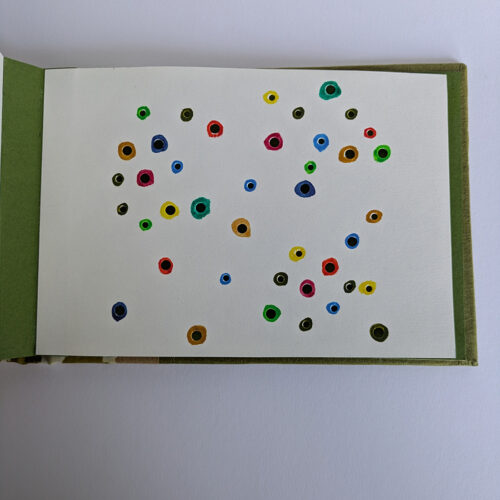
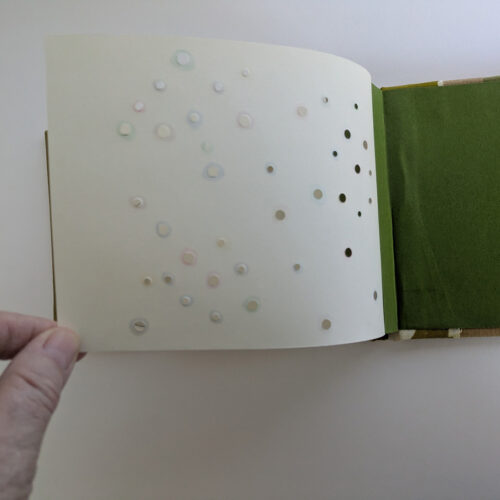
I wanted to combine musical crescendo with visual elements echoing the idea. With each page there are more punched holes that get bigger in size. They reveal colours that graduate from pastels to brighter intensities. 

Isi

For the theme Crescendo, I played with two structures/artist books using the vocabulary found in the  discourse of culture wars and material such as paper. The main focus was the experience of “tension” with forms, words and structures so to illustrate my perception of the extreme polarisation that I see in today’s discourse and language, particularly online.

Joan

Our theme this month was ‘Crescendo’. I struggled to get away from a simple image of musical notation. In the end I made a ‘bookwork’, with no text. I made an upward-sweeping curve of card and paper, held together by black thread to represent musical staves. The ‘notes’ suspended from the ‘staves’ are cut re-used prints. They go from a strong black to a white.

Patti

This small book is based on Hedi Kyle’s “Sling Fold”, pressed to lie flat.

Is it about sex? About art? About life? I couldn’t possibly comment. At my great age I’ve learned some things are better hinted at than explained.

Tony

For the LAB theme of crescendo I wanted to explore the idea of quiet drama where the climax of the action is muted and has to be searched for rather than shouted. My favourite example of this the Bruegel painting The fall of Icarus.

The unfortunate youth drops from the sky in a flurry of feathers totally unobserved by the people going about their business in the landscape. I thought the structure of this book allows a slow journey through the painting and quietly builds up to Icarus’ legs as he plunges unseen into the sea.

Lost

Isi

Lost in translation : a pamphlet about juggling with several languages.

A polyglot, someone who dances between languages, is mapping thoughts to sounds, feelings to forms, meanings to rhythms. Words are your tools, your compass. And yet, sometimes – inexplicably – none of them are quite right.

Being a polyglot is being at home everywhere but never on safe land instead you are constantly surfing the big linguistic waves. You carry worlds inside you, but when lost in translation, they feel like rooms with locked doors. You fumble with keys, knowing exactly what’s behind each one, yet stuck outside — watching, feeling, remembering — but unable to fully enter.

Joan

I was thinking about all the things we have lost – or think we have lost – in everyday life – keys, phone, glasses, credit cards and so on. This is a simple, irregular concertina structure, with collage, using Canson Mi Teintes paper.

The images are from copyright free sources or my own photographs.

Patti

This title, Lost, could only lead me to my daughter’s loss of sight and short term memory. It made me reflect not only on what she, and we, have lost, but what we still have – touch, laughter and memories, but – more importantly – hope and so much love.

The photographs are of her wedding day, her husband and children, things they have made for her that they can describe to her and she can touch, printed on cartridge and vellum papers.

Tamsin

Lost

I knew that I wanted to play with the idea of being lost in the pages of a book for this theme. I was then struck by the resemblance to map contour lines in the sumagashi paper I recently marbled. I decided to create a book of mostly blank pages, with the occasional page of marbled ‘map’ paper randomly interleaved.

Tony

I made this photo album shortly after my mother died. I had been to India and the press of people made me miss her even more. 

I took photos of places which were empty (a rare event) or I removed the crowds digitally when I got back home. The images fade away to nearly nothing, like memories as we get older or washing out as photos do as they age. The postcard says “Wish you were here” on the back. Interpret that as you will.

Alison

For this theme I wanted to share the search through my house for my phone. An occurance that happens far too regularly. The snake book presented an appropriate labyrinthical format and the photos are all the places I would search and in the same order, ultimately finding the phone in my bag where undoubtedly I had just placed it. 

Gill

For this month’s theme of ‘Lost’ , I have decided to comment on the frustration of trying to get anywhere by car or by public transport these days, in particular, the council’s decision to cover the countryside (in Surrey) with diversion signs. The piece of work is a maquette, as the final format has not been decided yet.