Palindrome

Joan

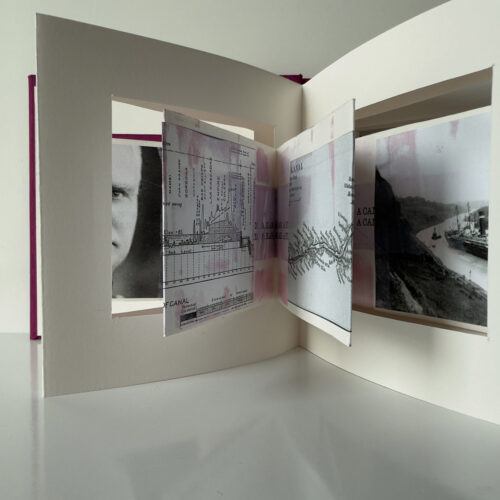
The topic this month was ‘Palindrome’ and I made a double concertina book to illustrate  ‘A man, a plan, a canal, Panama’.

It uses collaged papers and maps to show the building of the Panama Canal and the men who designed and completed it.

Alison

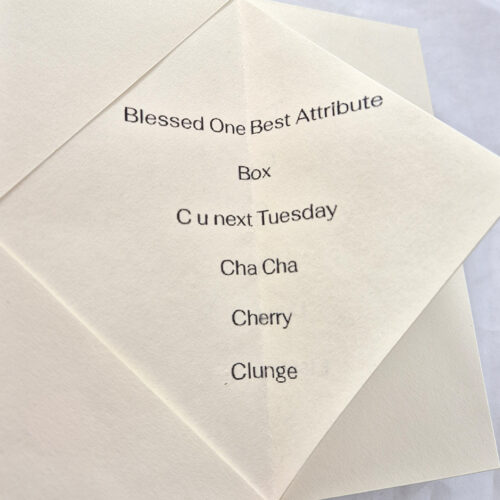
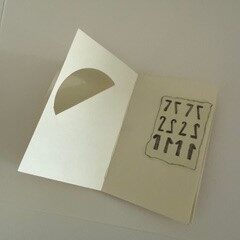
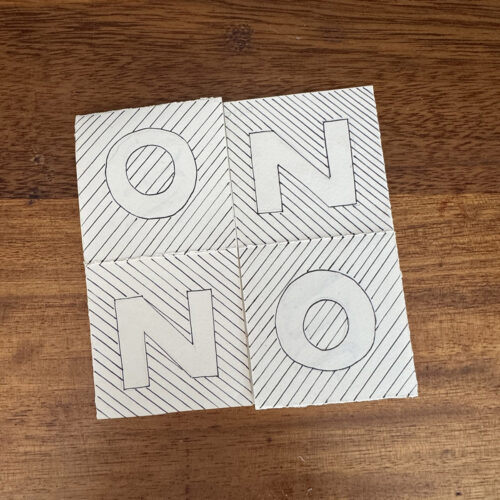
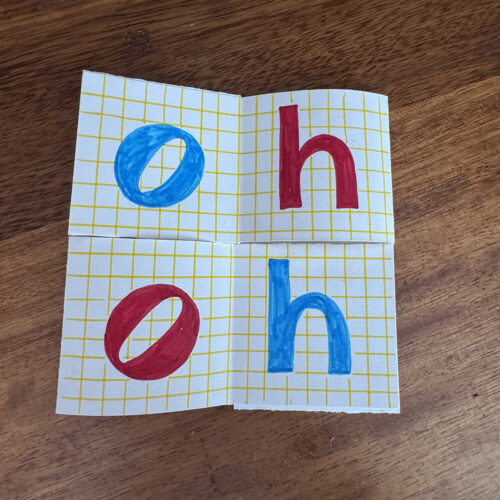
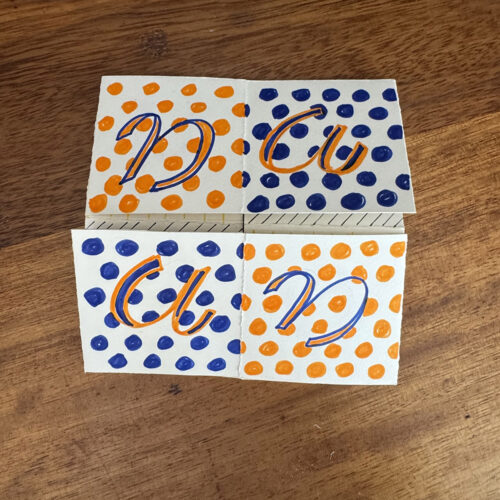
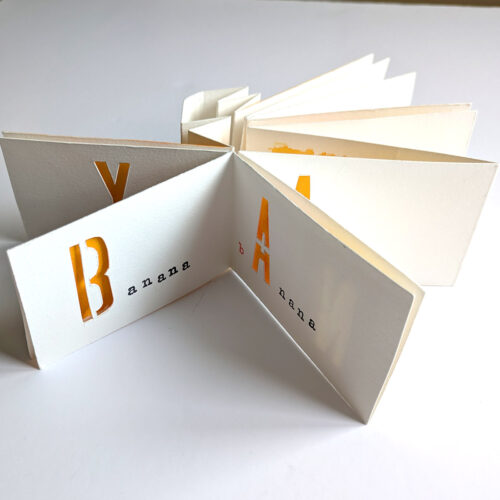
I wanted to make a flexagon book so used two-letter words that can be read forwards or backwards and with a little graphic assistance, upside-down. A fun experiment. 

Patti

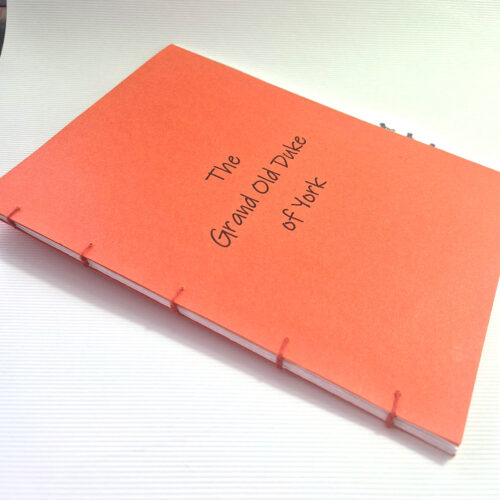
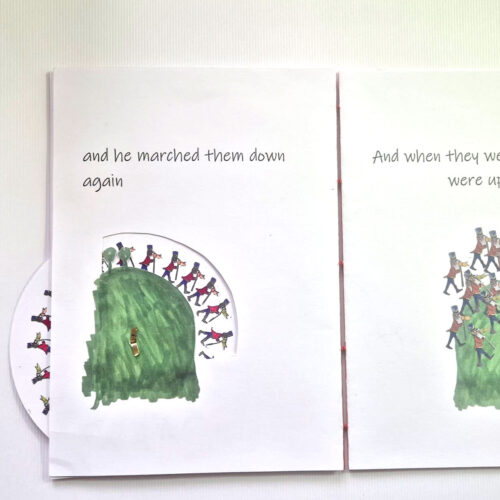
I decided to move away from the traditional palindrome for this month’s theme, instead making a book where the actions are reversed! My grandson, Alfie, loved it!

Tamsin

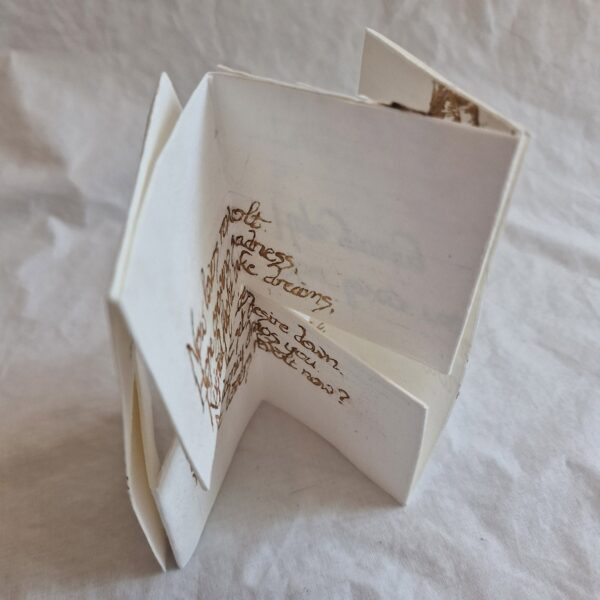
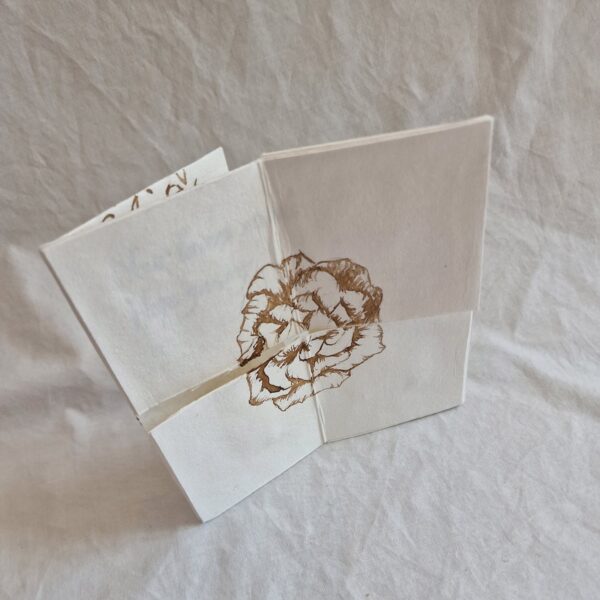
I knew that I wanted to make a square flexagon for this topic, as I felt that the continuous unfolding and turning structure would work well with words and phrases that can be read both forwards and backwards.

I decided to write a palindrome poem for the flexagon, inspired by the palindrome phase ‘won’t lovers revolt now’. I used two sheets of Japanese Hosho paper for the book, writing in walnut ink.

Gill

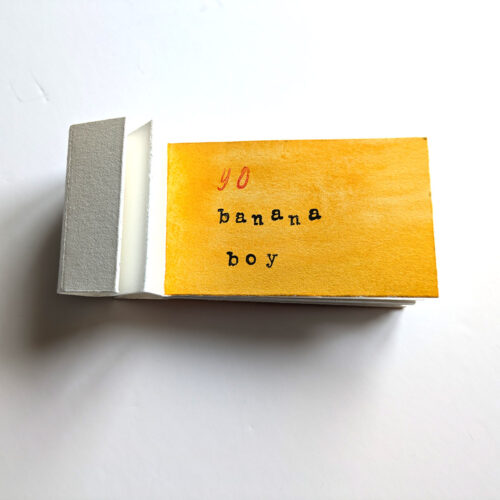
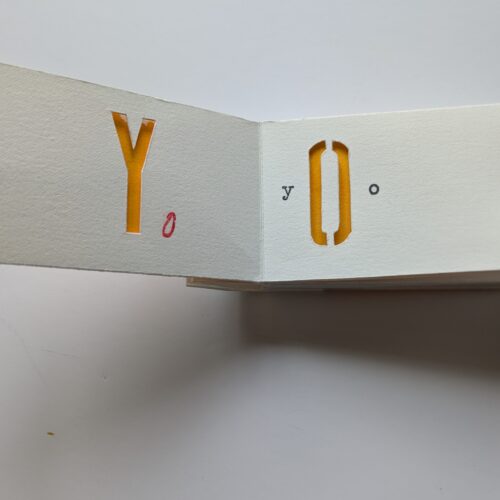
For the theme Palindrome I chose to make a simple graphic book based on my favourite Palindrome which is Yo Banana Boy.

Isi

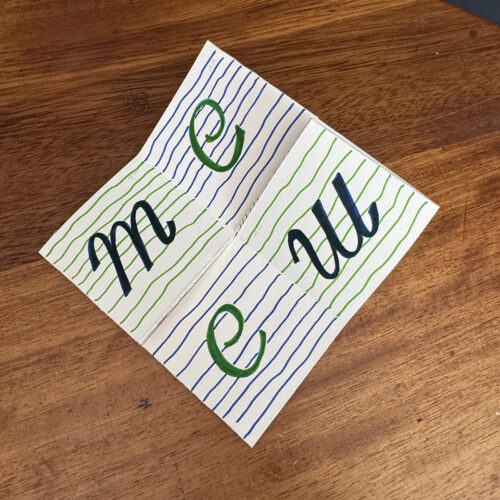
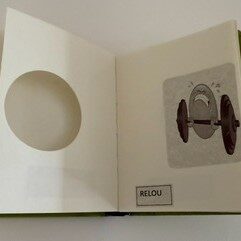
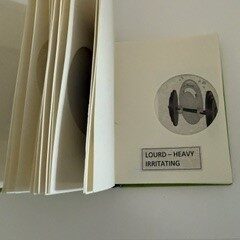
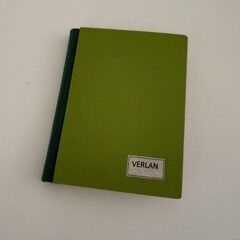
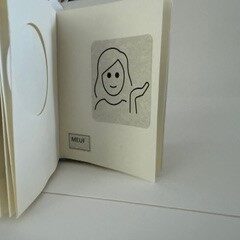
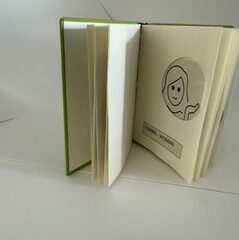
A book about a French slang called VERLAN – “back to front” where the vocabulary is built with the inversion of syllables in a word. Originally a gang slang that is now used in the jargon of youth culture. Rotten for example is POURRI >> RIPOU which stands for a corrupt policeman. Another example is for the word woman in French, which is FEMME in Verlan it becomes ME- FEM > MEUF.
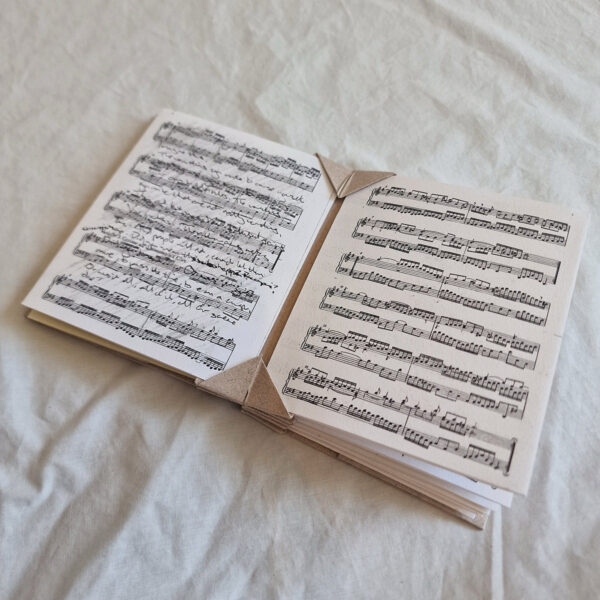
Verlan, I feel, carries a poetic quality and rebellious spirit in its language.
Palimpsest

Isi

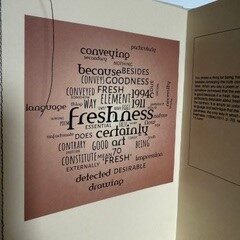
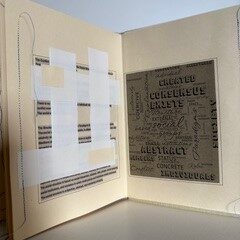
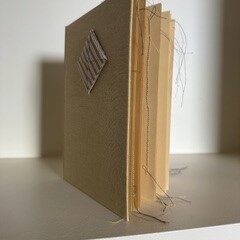
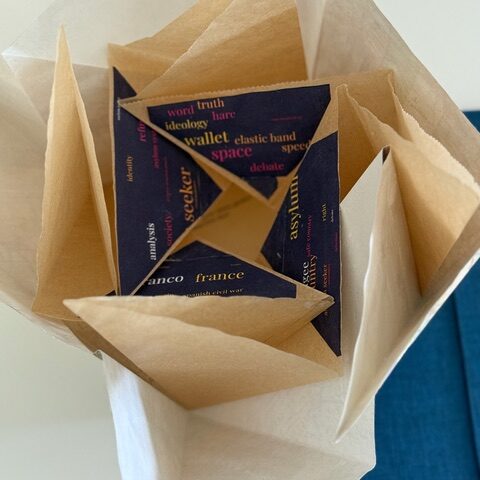
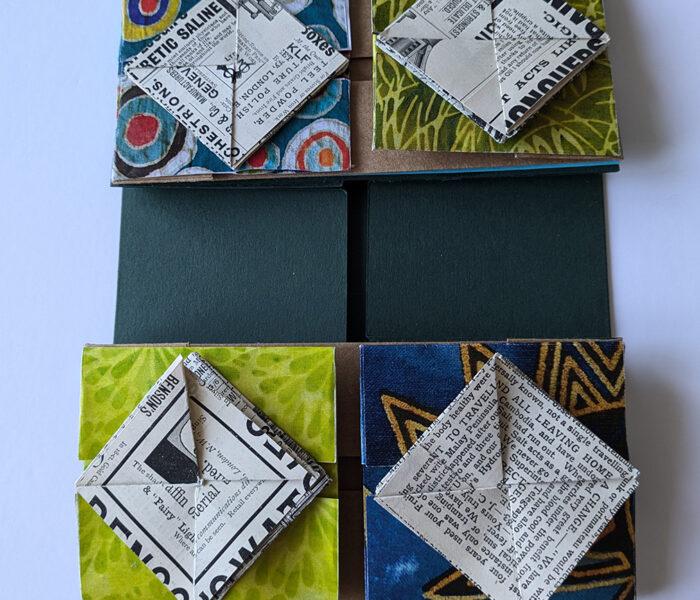
For the theme of Palimpsest, I made a book around language and discourse. Language of the past that still applies to today’s discourse, a repetition of words with the power of destruction, of creation and the threads that link our history – past, present, and future to humans in search of identity.
Joan

This book is an adaptation of a Hedi Kyle structure and reflects a series of layers and meanings from my work on the Yorkshire textile industry, with handwritten text from order books in a local mill.

Patti

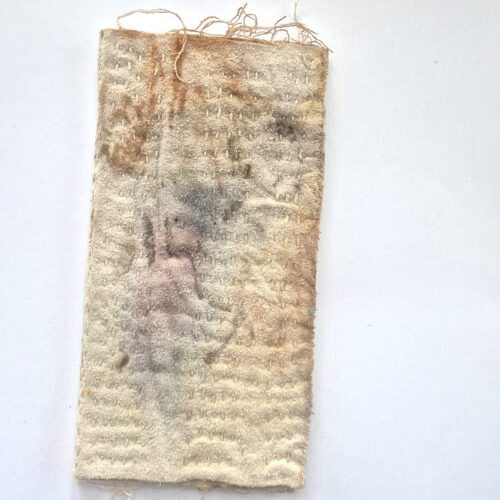
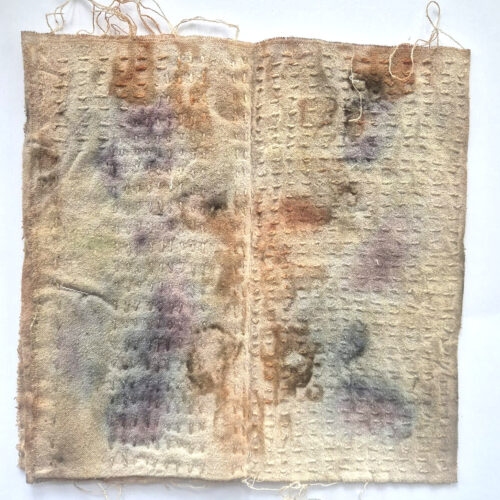
I didn’t have time to make new work for this month’s theme; instead I found a textile piece I made when “collecting colour” with artist Alice Fox. The vintage linen has been stained with natural dyes and then stitched. It’s wonderfully tactile.

Tamsin

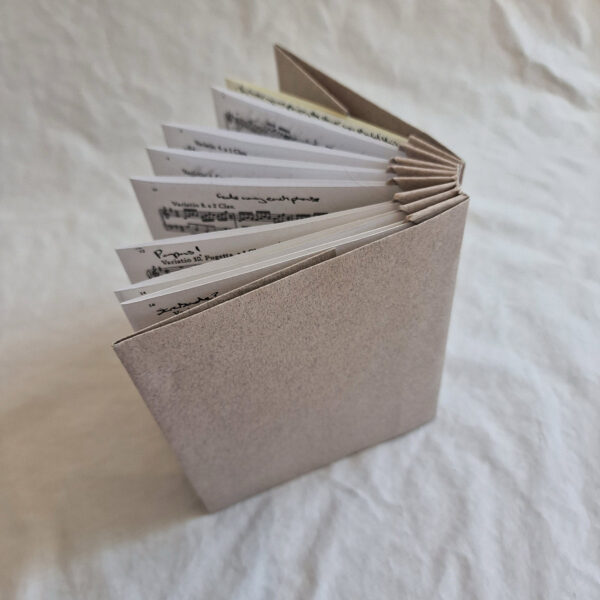
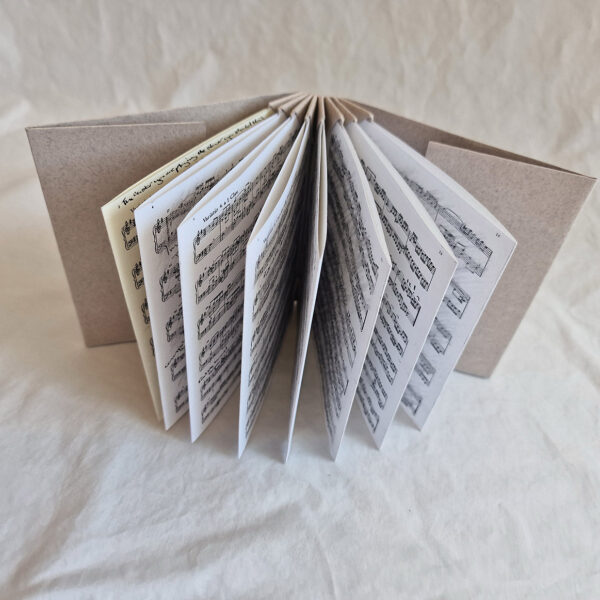
This book is part of an ongoing project on JS Bach’s Goldberg Variations. I started by considering how musicians will often write all over a score while they practise and how I nearly always sit down to play the piano with a pencil to hand. I printed some pages from the score onto cartridge paper, which both lent itself to being written on, but also having areas of the score scraped away. I slotted the pages into a version of Heidi Kyle’s crown book.

Open/closed

Gill

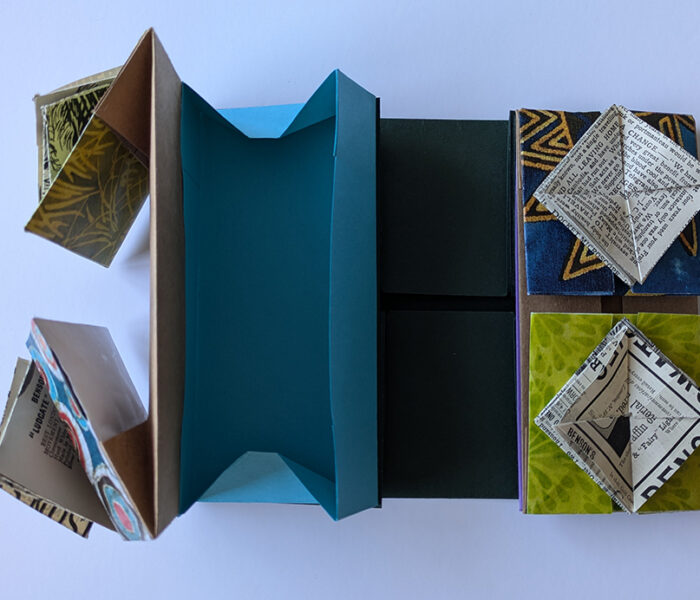
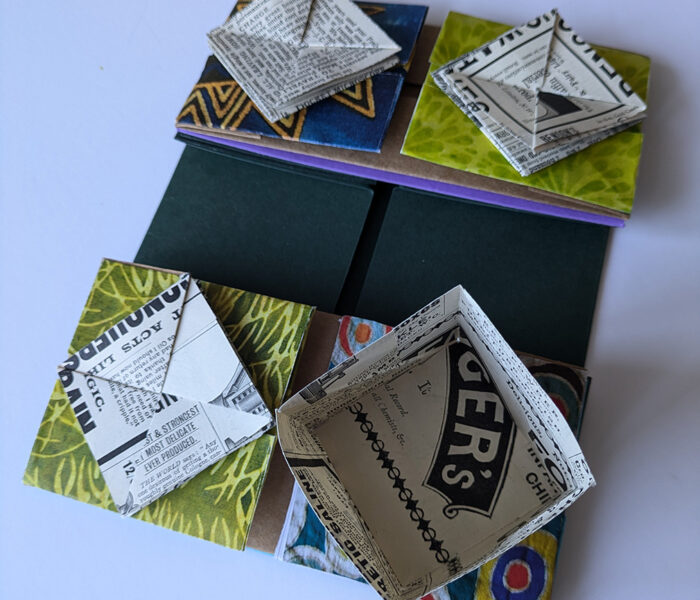
My response to our first theme of Open/Closed was to make a Chinese Thread Book. The ‘book’ contains a total of 13 different compartments that are revealed as you open each section

Isi

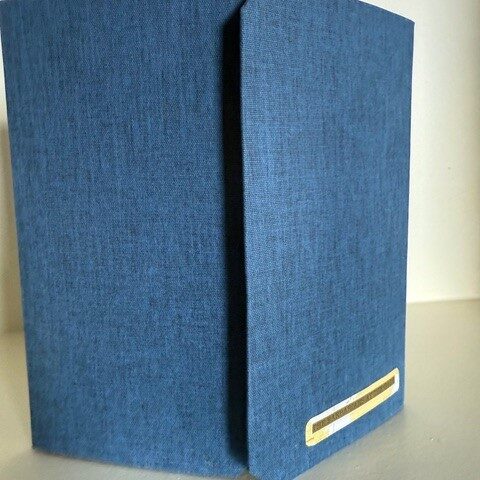
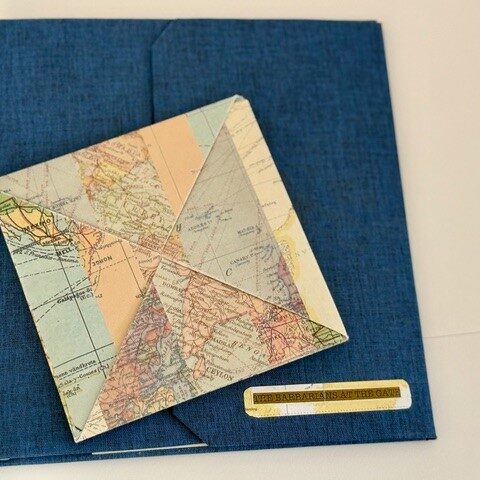
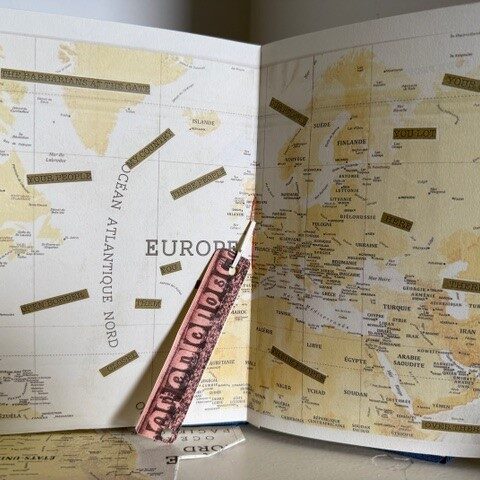
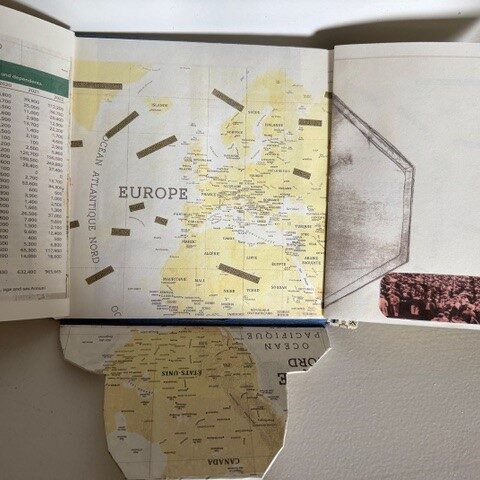
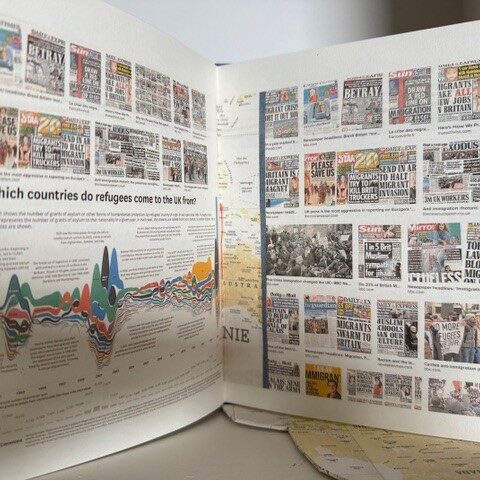
For the theme Open/Closed I chose the “Barbarians at the Gates” a project on the discourse on immigration, open or closed borders as well as the notions of borders.

Joan

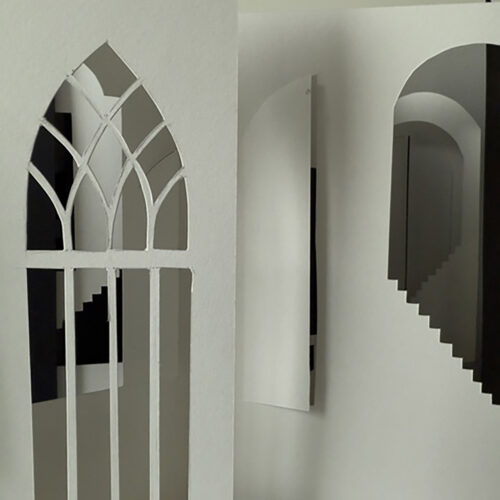
This was a series of small books based on images of windows and doors in the Bloomsbury area of London.

Some open, some closed.

Patti

I had fun with a Turkish Map Fold book for this month’s theme. The irony is that even with her eyes open, my darling daughter can no longer see, having lost her sight to meningitis in March 2024.

Tamar

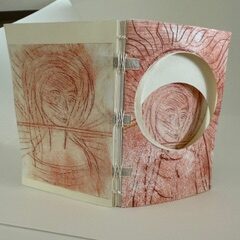
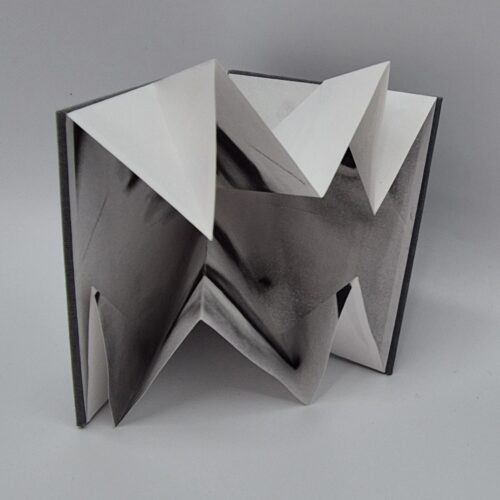
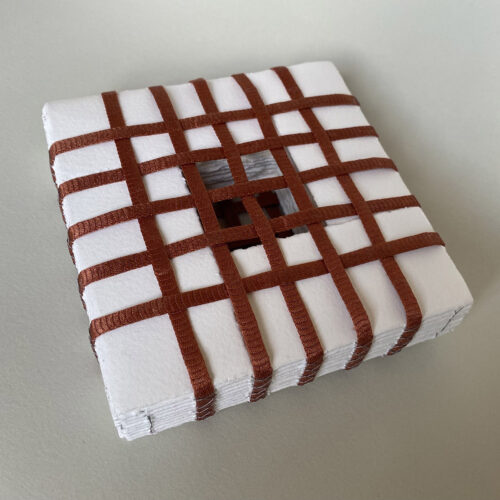
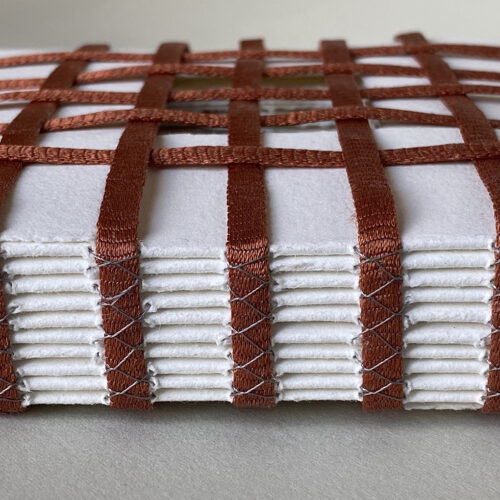
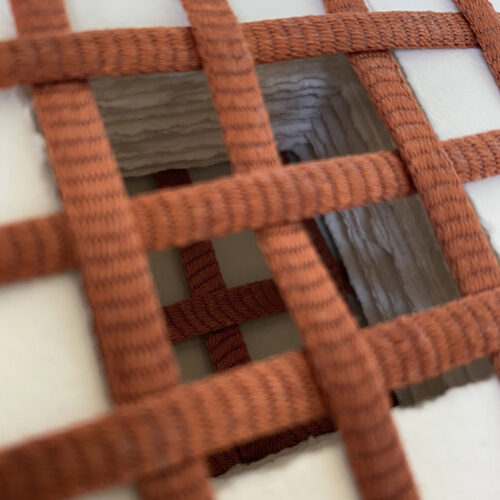
This is Book Block 1; materials Somerset cotton printmaking paper grey, viscose embroidery thread

I loved the idea of a book that couldn’t be opened. This is made up of four books interleaved and sewn over tapes that create one long loop, that is woven together to create the ‘cage’.